


One year ago, on June 29, 2023, the Supreme Court ruled to end affirmative action in university admissions, which aimed to increase the diversity of students at higher education institutions. While it is clear that this highly contested decision will directly impact the diversity of future graduating classes, are there any unforeseen effects of ending affirmative action on universities?
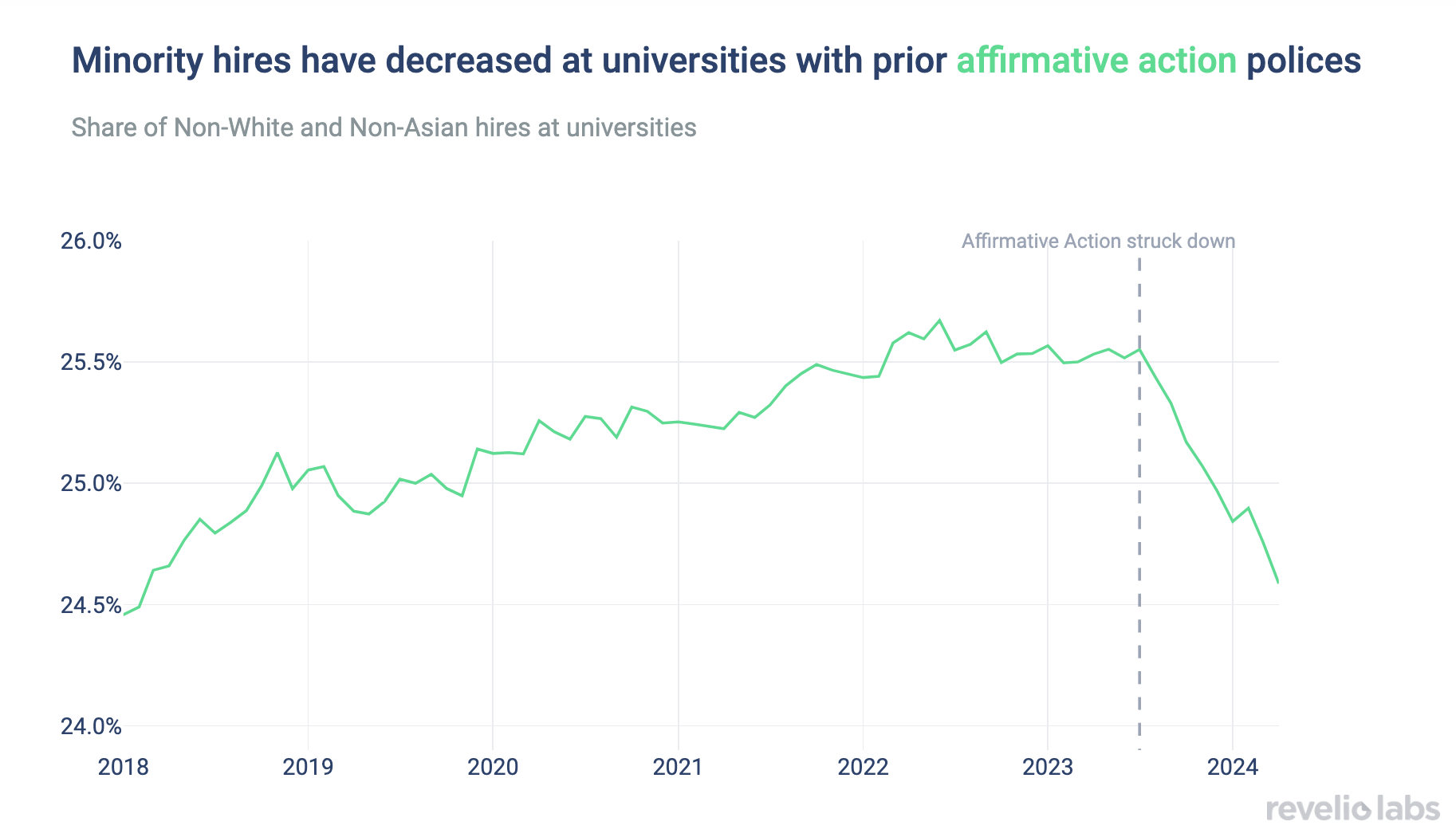
Using Revelio Labs’ workforce intelligence data, we examine the hiring trends of universities that had previously adopted affirmative action policies. There appears to be a steep decline in the share of minority hires directly after the Supreme Court’s decision. While affirmative action policies do not directly impact hiring decisions, it is clear that universities are now using more caution when considering race in hiring.
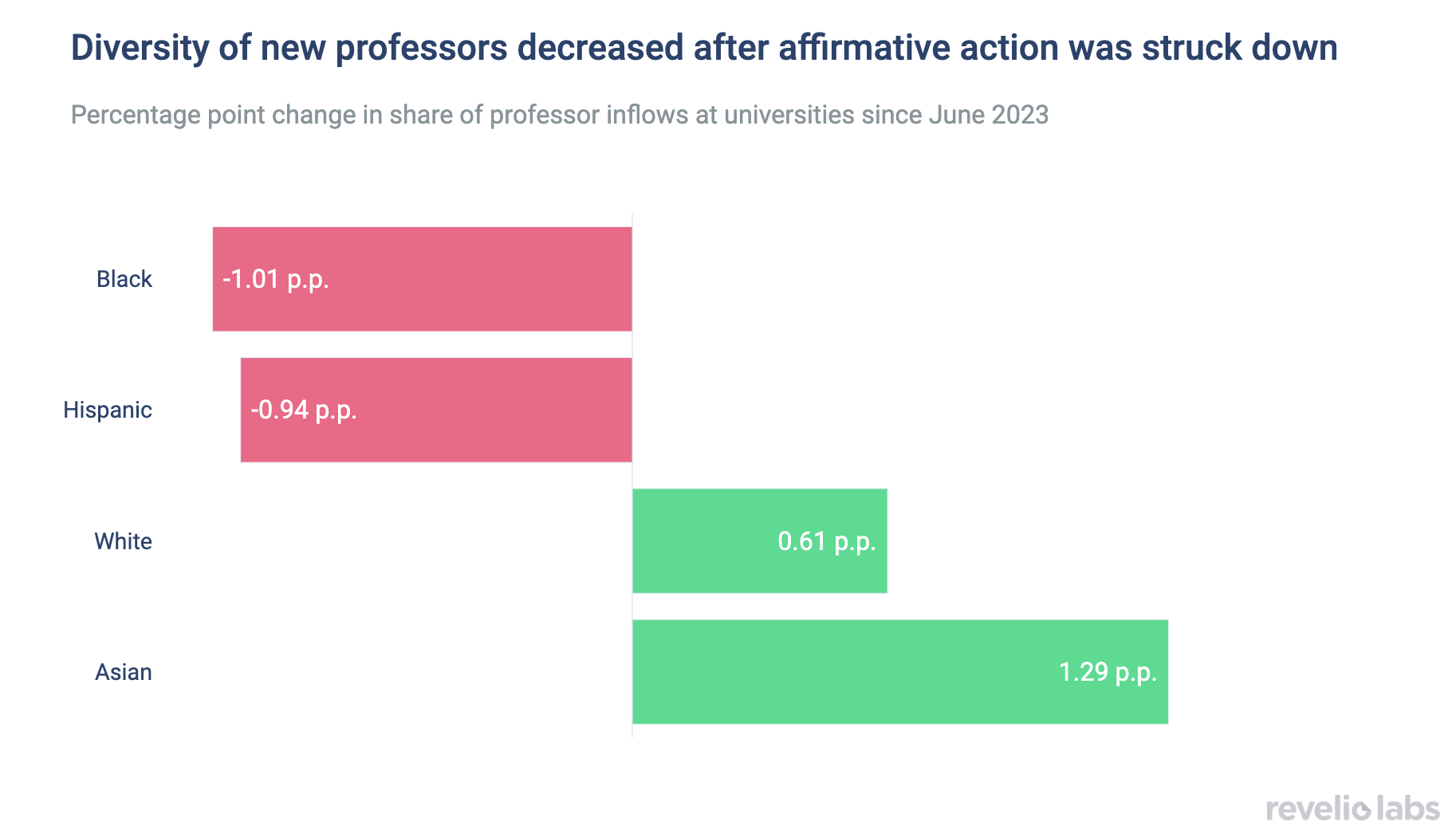
To further examine the decline of diverse hires at universities that previously had affirmative action policies, we look at the diversity of faculty hires—a group which has been particularly impacted by this change in policy. In the months following the Supreme Court decision, universities that previously had affirmative action policies saw a decrease in the number of Black and Hispanic professors hired and an increase in the number of White and Asian professors hired. It appears that universities are starting to hire professors from more overrepresented backgrounds after the Court's decision.
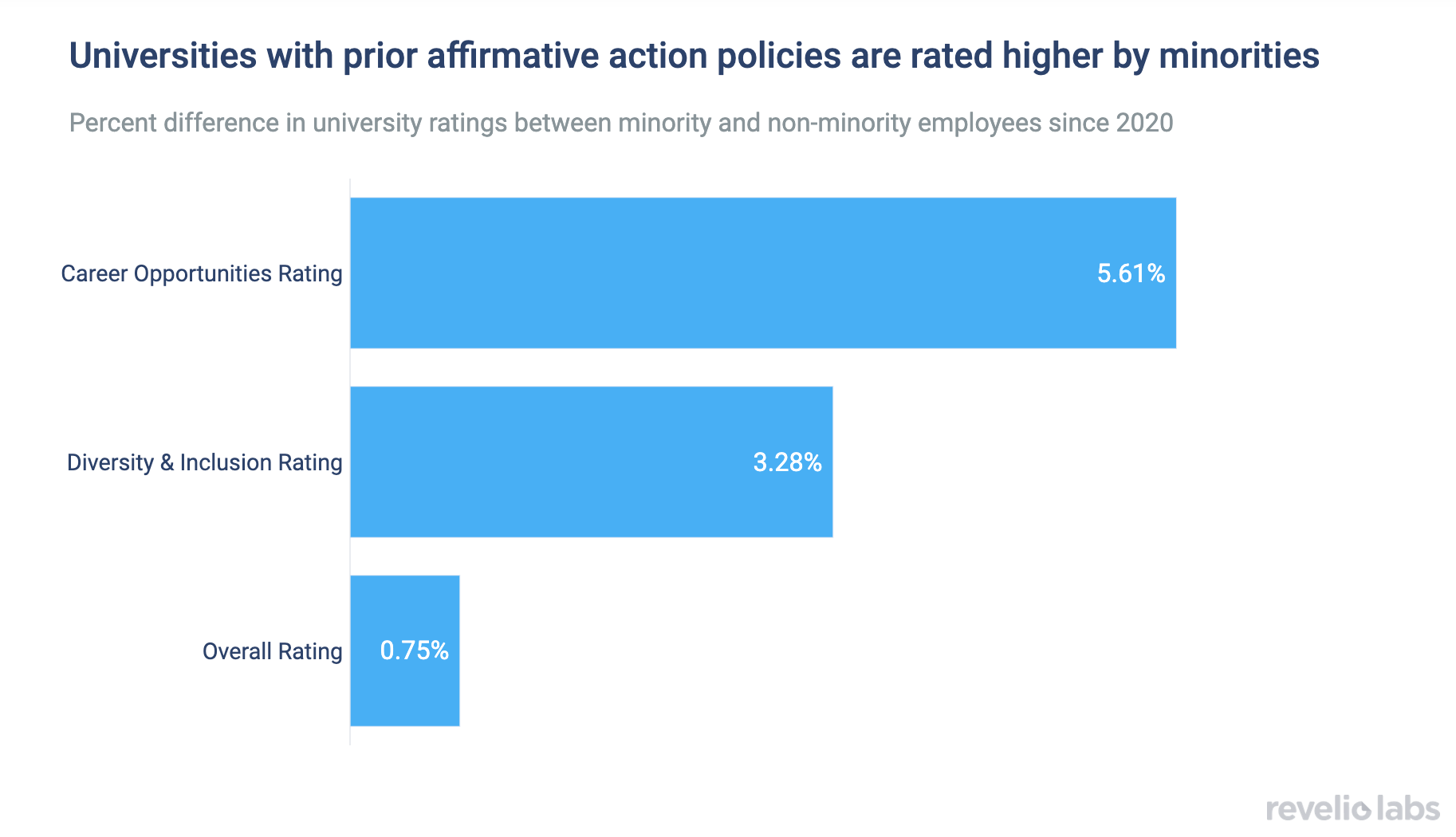
Aside from increased diversity in both the student and faculty bodies, what other impacts did affirmative action policies have at universities? When analyzing the workplace sentiment of minority employees at universities, we find that minorities report greater satisfaction at universities that had affirmative action policies. Minorities are particularly content with the career opportunities and diversity and inclusion at these universities, signaling that affirmative action policies are beneficial in fostering an inclusive working environment.
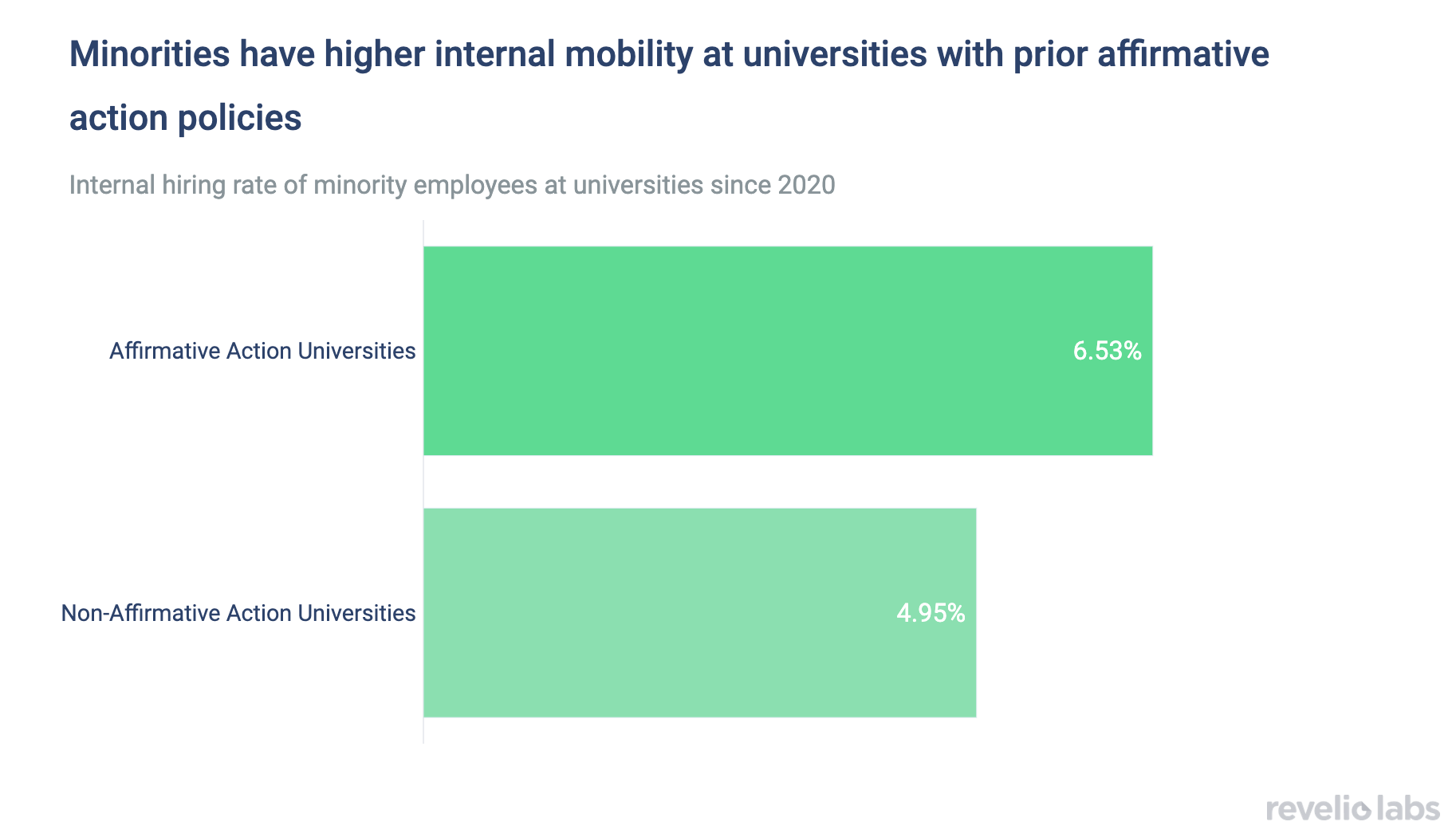
Furthermore, minorities had higher internal mobility at universities with affirmative action policies, meaning that they have increased opportunities to rise up the ranks and advance their careers at these institutions. It is clear that affirmative action policies are important not only for the initial hiring of a diverse workforce but also for creating a diverse leadership at universities.
While affirmative action policies originally aimed to increase the diversity of student bodies, they also fostered a diverse workplace at universities and allowed more opportunities to minorities in academia. As the demographics of student bodies change going forward, maintaining diversity in academia will become an even more important question.


