


The pandemic has reshaped the workplace. The rise of work-from-home and collaboration software like Zoom and Slack have changed not only how we collaborate but how we think about our coworkers and employers. How have these changes affected workers who collaborate, versus those who don't?
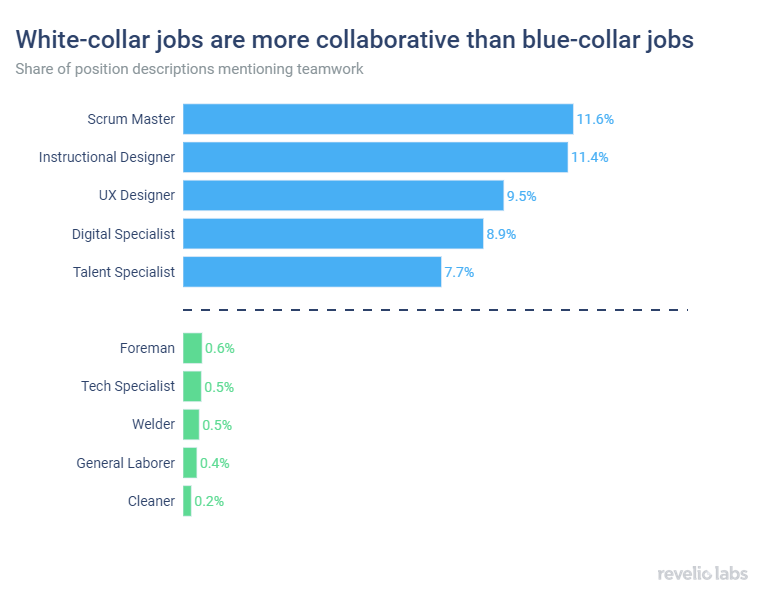
To answer this question, Revelio Labs developed a measure of collaborative culture for each job. We measure collaborative culture for different roles as the frequency at which workers use teamwork-related vocabulary, such as "teamwork," "collaborate," and "cooperate" to describe their roles. This data analytics tool reveals that blue-collar jobs are less teamwork-oriented than white-collar jobs, particularly those in technical roles.
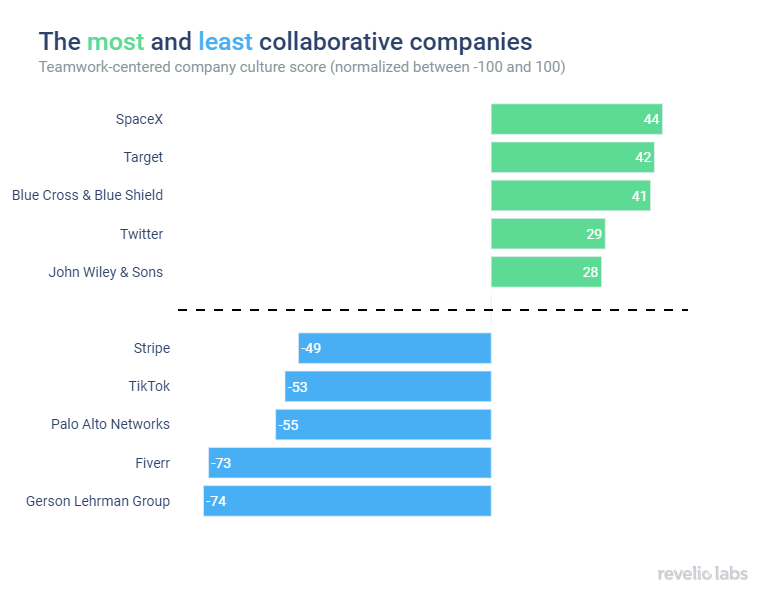
Using this measure, we constructed a collaborative company culture score. This data analytics tool measures the strength of the collaborative culture in the company relative to its industry. Our collaborative culture score identifies that SpaceX has a strong teamwork culture relative to the aerospace manufacturing industry, whereas TikTok has a weak teamwork culture relative to the social media industry – weaker than its peer Twitter (though recent layoffs may yet have an impact on Twitter’s score).
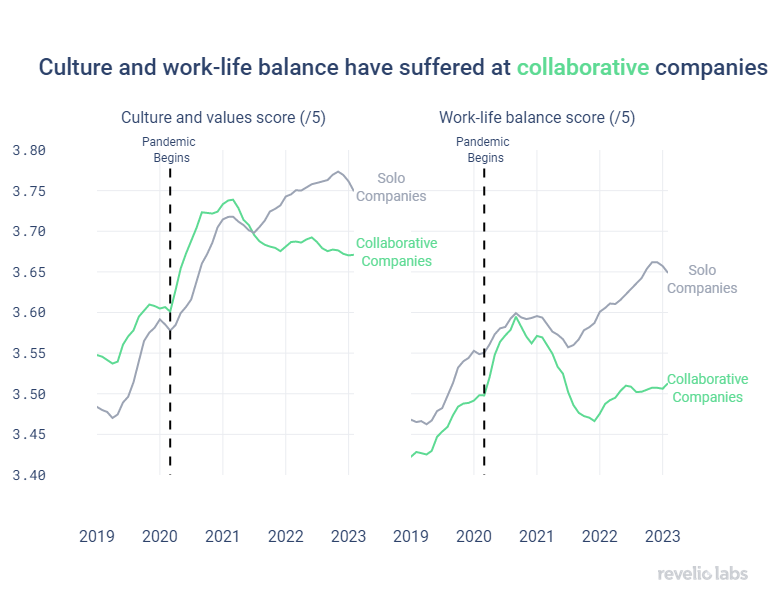
How does employee sentiment differ in companies with strong and weak collaborative cultures? Employees in solo companies (those in the bottom quartile of collaborative culture scores) have recently rated company culture and work life balance higher than employees in collaborative companies (those in the top quartile of collaborative culture scores), our data show.
The difference in sentiment between employees in solo and collaborative companies has widened notably since the rise of remote work in mid-2020. Employee reviews at collaborative companies point to reasons for this divide – employees complain that remote colleagues are "hard to reach," with one reviewer describing their work-from-home workplace as "teams working in silos."
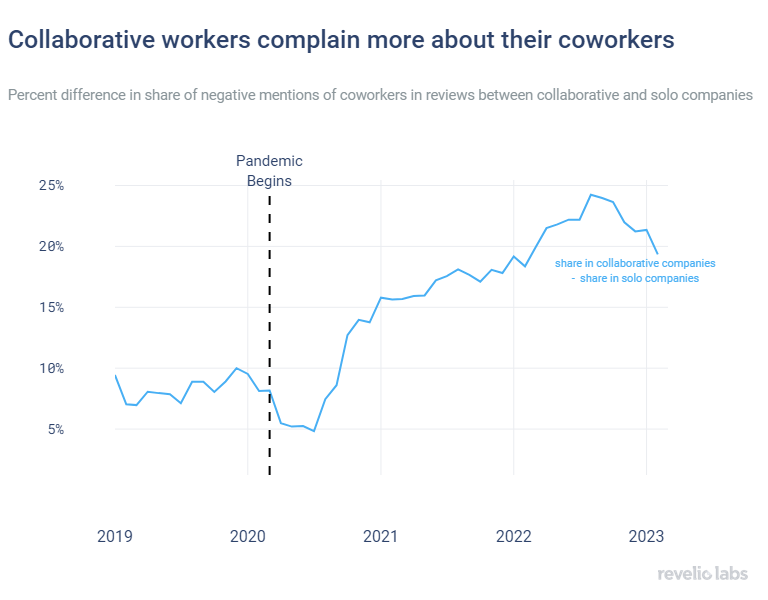
The widening gulf between the sentiment of employees in solo and collaborative companies coincides with an increasing fraction of workers at collaborative companies complaining about their coworkers. Remote work often comes with longer meeting hours, and greater potential for miscommunication and tension among colleagues. Employees in solo companies are sheltered from these challenges while still getting to avoid daily commutes.
Free to reproduce with attribution and a link to reveliolabs.com.
Cite this article
- Plain text
- Revelio Labs, "Does Teamwork Still Make the Dream Work?" May 30, 2023.
- HTML
- Revelio Labs, "<a href="https://www.reveliolabs.com/news/social/does-teamwork-still-make-the-dream-work">Does Teamwork Still Make the Dream Work?</a>" May 30, 2023.
- Academic
- Abdelwahed, L., & Rawlings, D. (2023, May 30). Does Teamwork Still Make the Dream Work? Revelio Labs.


