


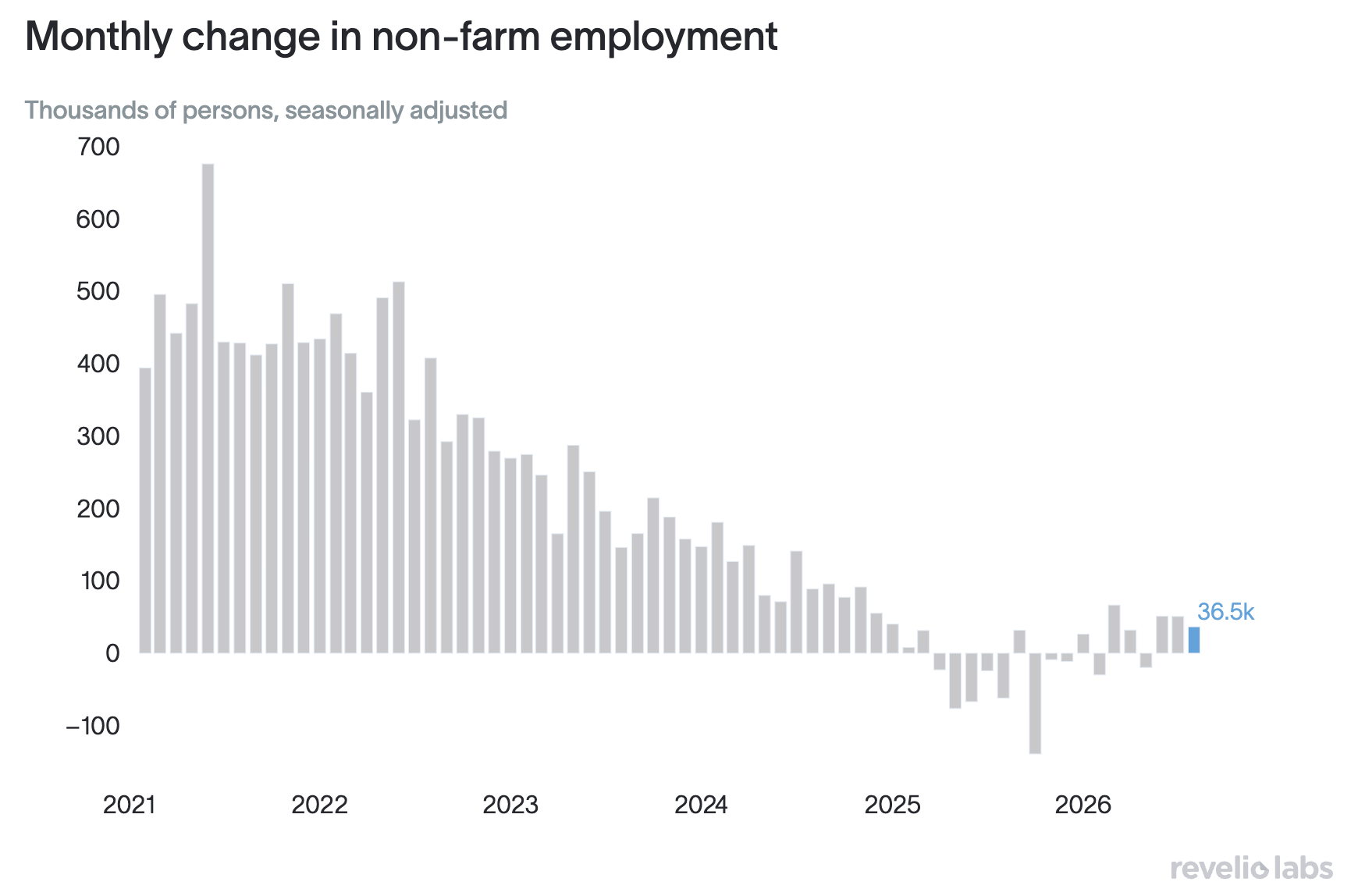
The U.S. economy added 36.5k jobs in August, according to Revelio Public Labor Statistics (RPLS), even as active job postings declined another 3%. Beneath that aggregate resilience, our latest AI Labor Market Tracker shows a more uneven picture: employment is weakening in the occupations most exposed to AI, particularly among younger workers, but the firms most exposed to AI are seeing fewer layoffs — not more.
Employment growth remains resilient
Revelio Public Labor Statistics shows that the U.S. economy added 36.5k jobs in August. These gains were driven by significant job gains in the Public Administration and Health Care and Social Assistance sectors. Meanwhile, the Leisure and Hospitality and the Retail Trade sectors saw declines in employment. Employment continues to expand despite a labor market that remains relatively low-churn, with employer demand considerably cooler than during the post-pandemic hiring boom.
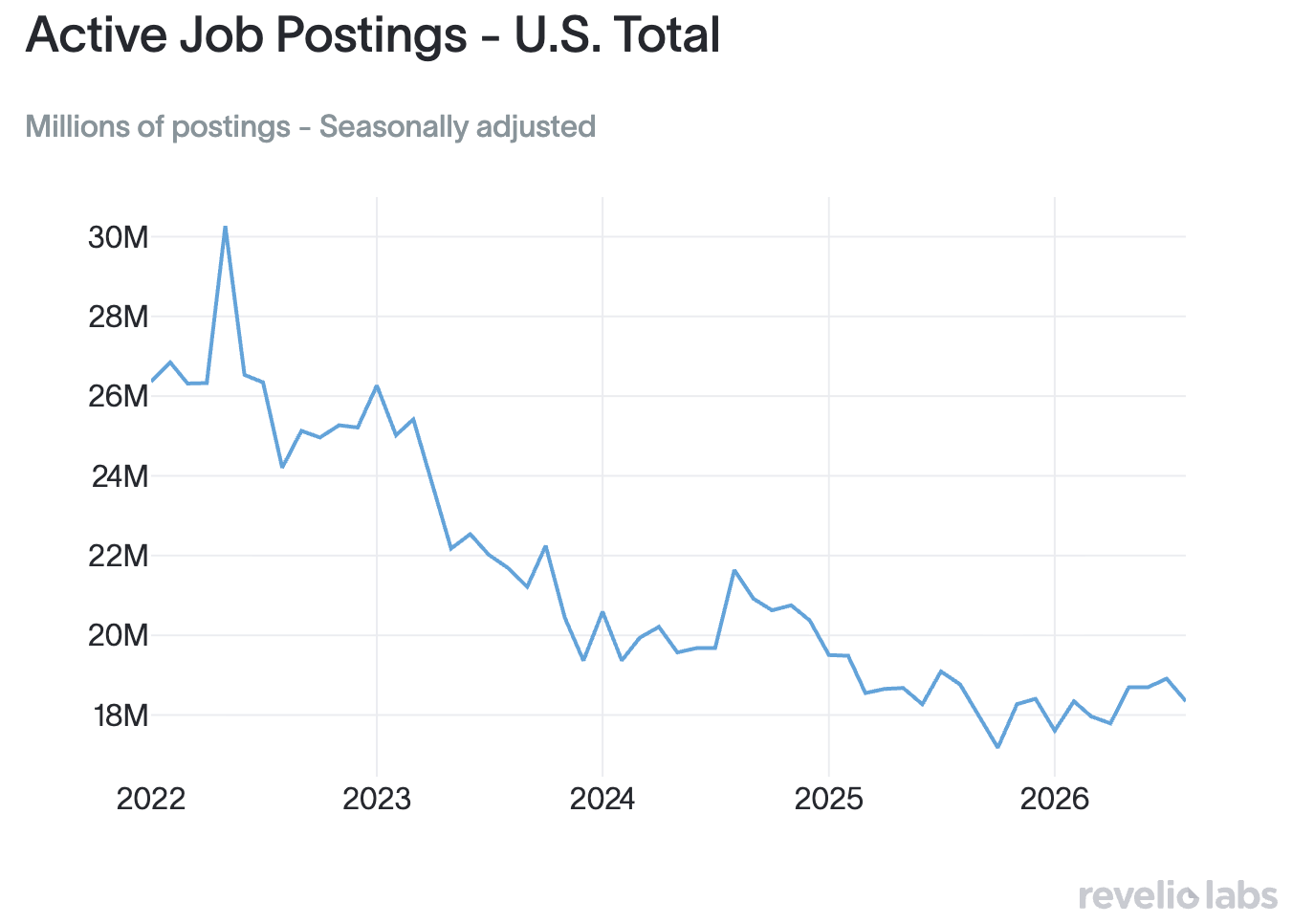
Active job postings in the US fell in August 2026, dropping 3.0% from July to 18.3 million. That is also 2.2% below August 2025. The pullback was broad: nearly every sector posted fewer openings than a month earlier. The sharpest declines were in Transportation and Warehousing (−13.2%), Wholesale Trade (−11.3%), and Retail Trade (−8.2%). Education and Health Services and Retail accounted for the largest drops in absolute terms. Professional and Business Services was the main exception, rising 0.7% on the month and 7.1% from a year earlier. Transportation and Warehousing remains the weakest sector on a year-over-year basis, down 37.6%.
AI is reshaping employment without triggering broad displacement
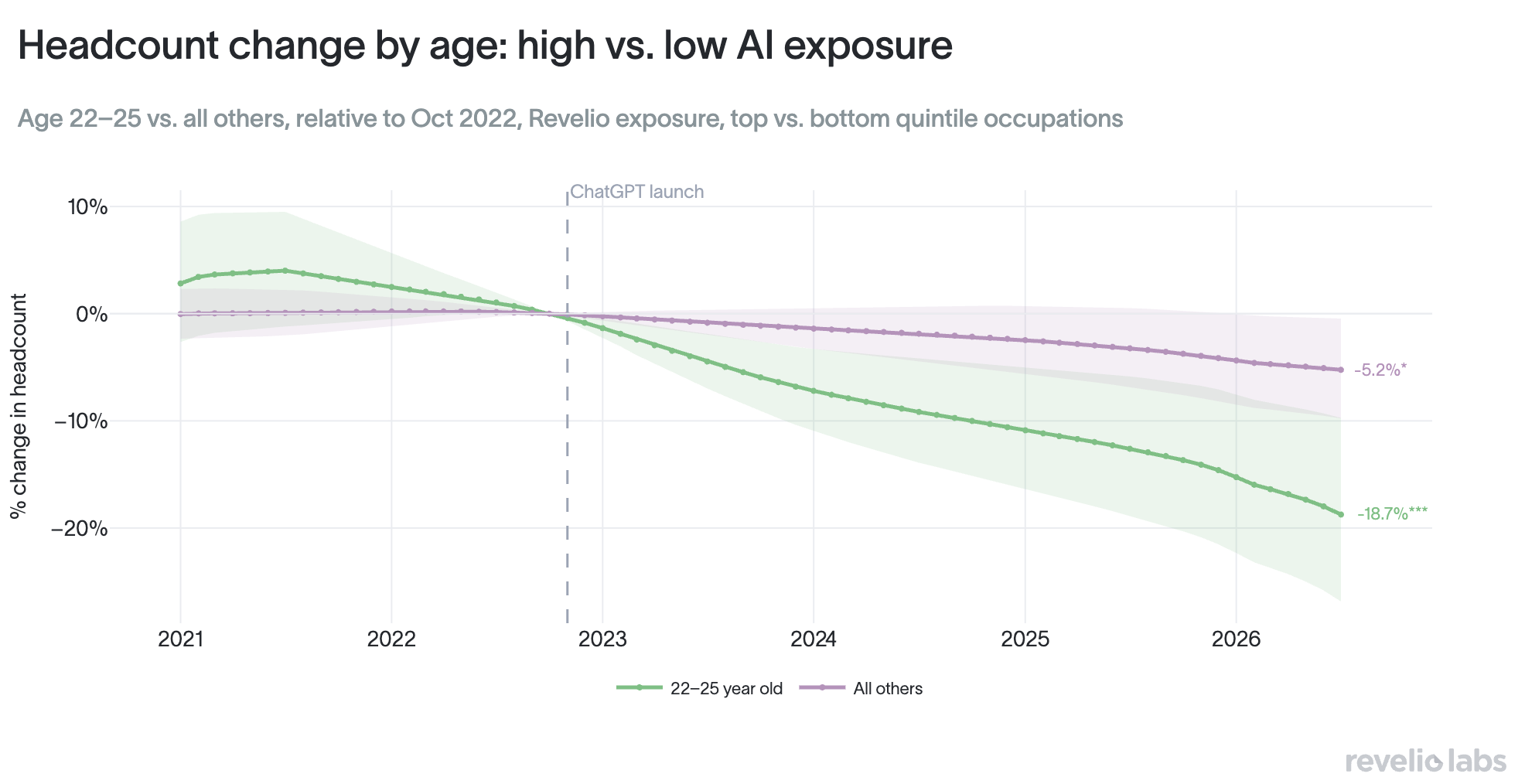
Employment continues to weaken in the occupations most exposed to AI, particularly for younger workers. Since before ChatGPT, employment in the most AI-exposed occupations is down around 6% relative to the least-exposed occupations, with the gap reaching 19% among workers aged 22–25.
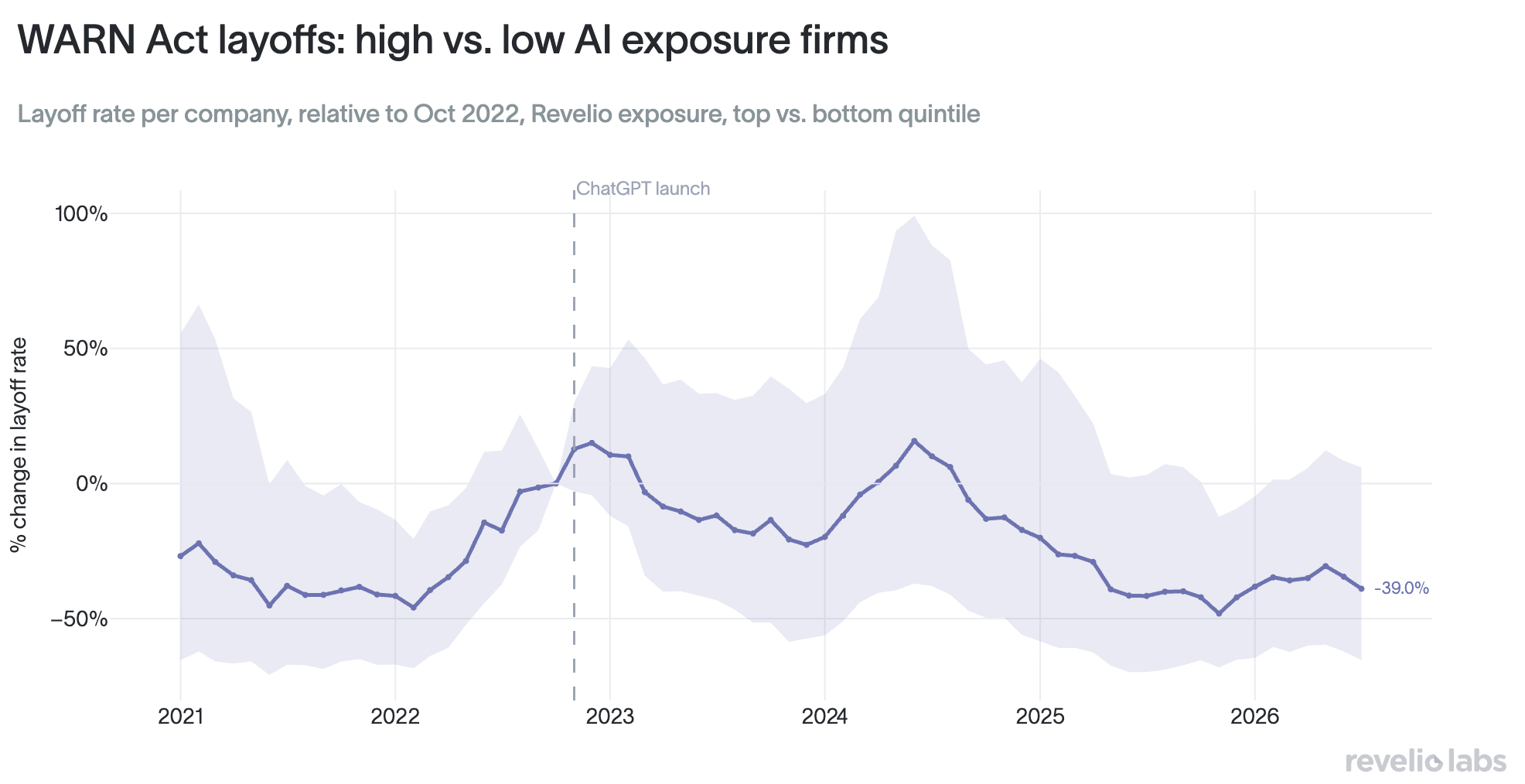
But the firm-level evidence continues to point away from broad AI-driven displacement. The most AI-exposed firms are seeing fewer layoffs than the least-exposed firms, rather than more.
That pattern is consistent with what we see among firms that have adopted AI. AI-adopting firms continue to expand employment relative to non-adopters, although adopters were already growing faster before adoption and the gains remain concentrated in senior roles.
Taken together, the evidence suggests that AI is affecting where employment grows and which workers face weaker opportunities, rather than producing a broad wave of job losses.
This month’s tracker also shows that the pace of new firm AI adoption has slowed from its spring peak, while most changes in work content continue to occur within occupations rather than through shifts in the occupation mix.
Explore the full RPLS release
Explore the AI Labor Market Tracker
Free to reproduce with attribution and a link to reveliolabs.com.
Cite this article
- Plain text
- Revelio Labs, "RPLS US Jobs Report: The US economy adds 36.5k jobs in August," September 2, 2026.
- HTML
- Revelio Labs, "<a href="https://www.reveliolabs.com/news/rpls/rpls-us-jobs-report-the-us-economy-adds-36-5k-jobs-in-august">RPLS US Jobs Report: The US economy adds 36.5k jobs in August</a>," September 2, 2026.
- Academic
- Abdelwahed, L., Simon, L. K., Wheeler, J., & Wilkie-Rogers, C. (2026, September 2). RPLS US Jobs Report: The US economy adds 36.5k jobs in August. Revelio Labs.


