


With the end of the pandemic and the Great Resignation, we see an increase in “boomerang employees,” or employees who have returned to work at companies where they previously left. This phenomenon is reshaping the ways organizations think about talent acquisition, retention, and employee experience: Boomerang employees may provide businesses with a wider hiring pool of people who are already accustomed to the culture and values of the company. This week, we take a closer look at who these boomerang employees are.
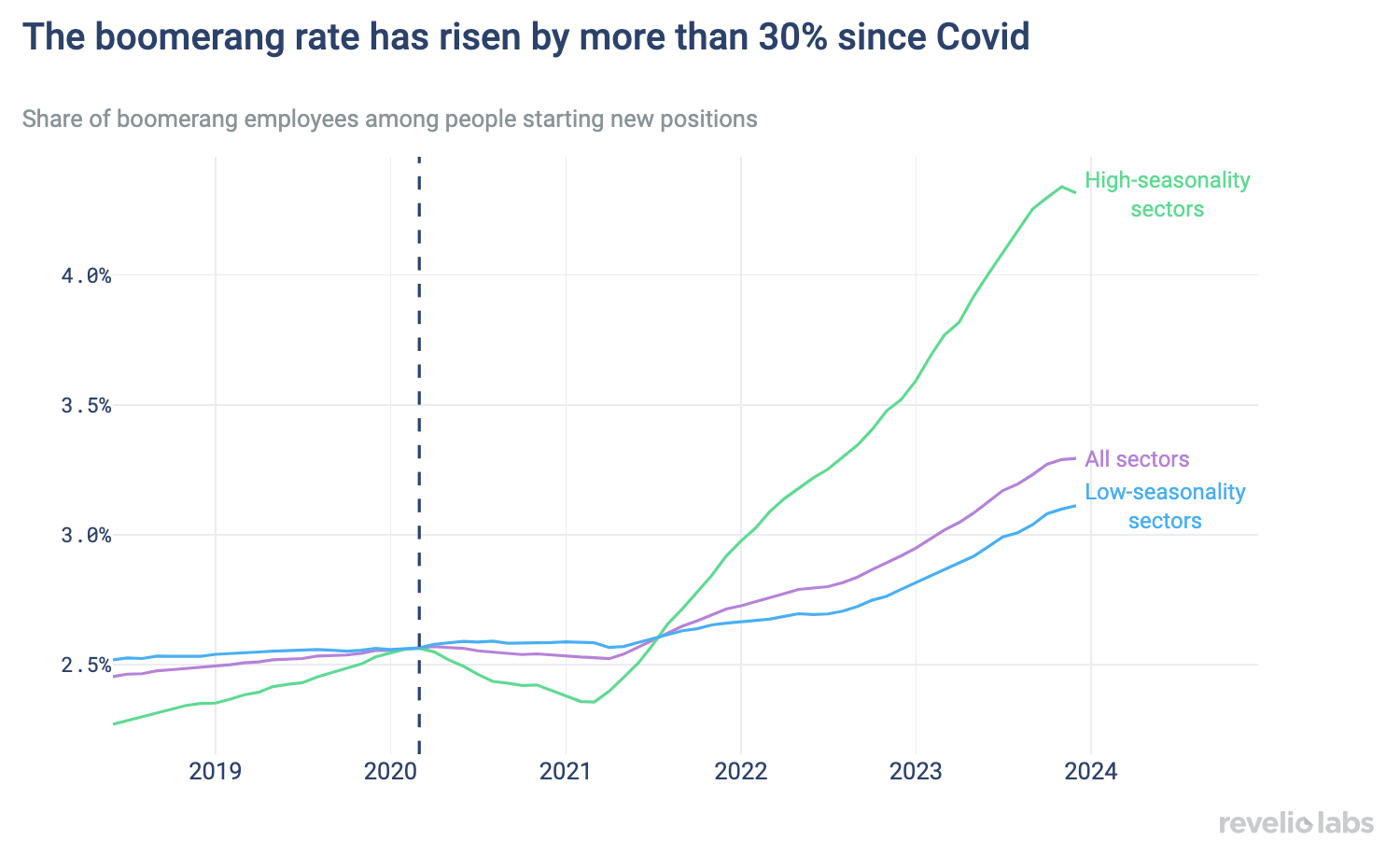
First, we look at the overall boomerang rate in large companies with at least 500 new hires in the past year. We define a boomerang employee as one who ended a position at one employer, worked for at least one other employer in between, and then started a new position at the original employer that they left. We can see that the share of boomerang employees among people who started new positions each month in these companies has stayed fairly constant at around 2.6% before the pandemic up until mid-2021, but it has increased steadily since then.
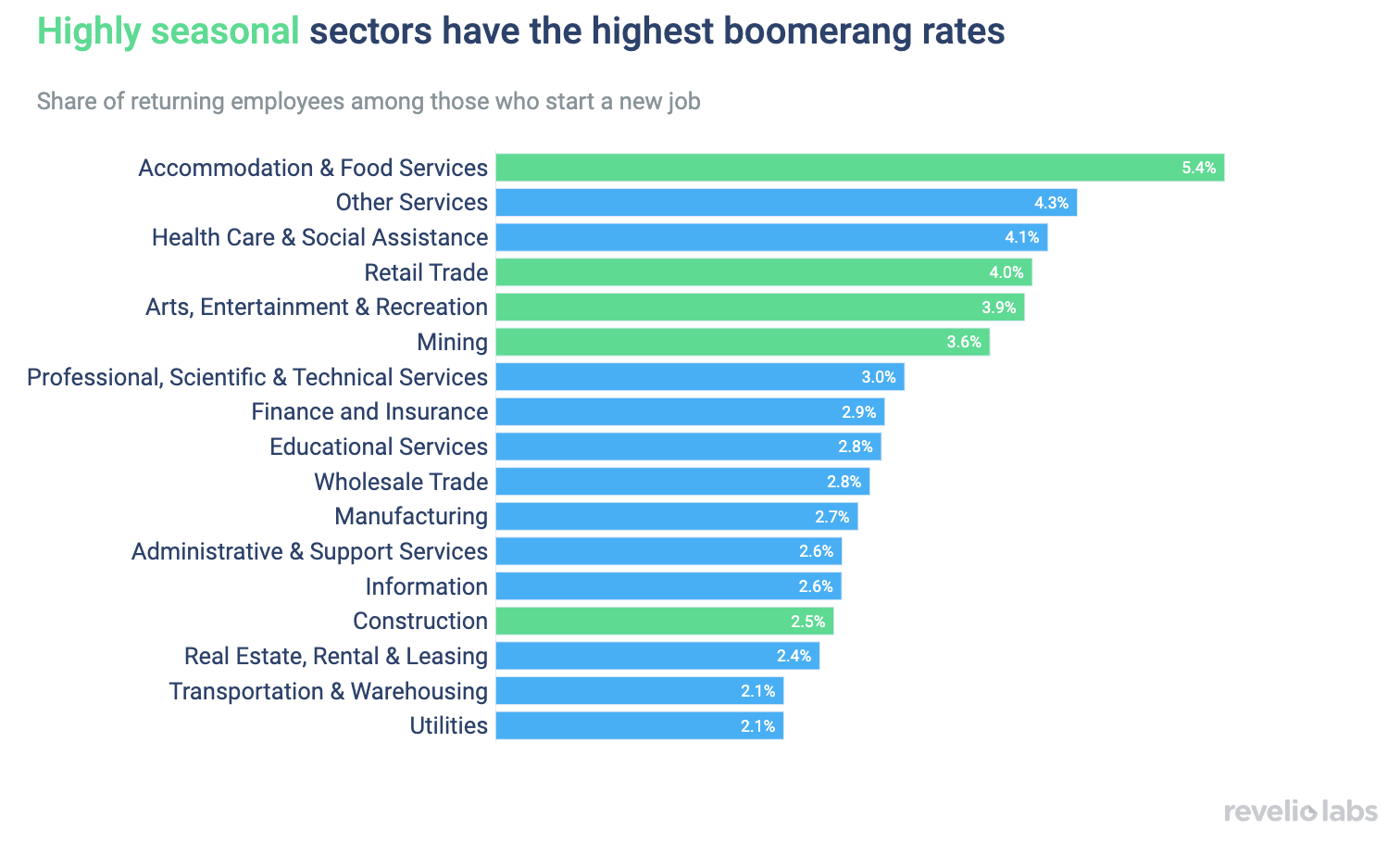
Which sectors have the highest boomerang rates? Perhaps unsurprisingly, we find that companies in sectors with high shares of short-term or seasonal workers also tend to have the highest boomerang rates. For example, on average, 5.4% of employees in the Accommodation & Food Services sector who started new positions in the past year had previously worked for the same company before. Among sectors less exposed to seasonality, companies in Healthcare also experience a relatively high average boomerang rate of 4.1%.
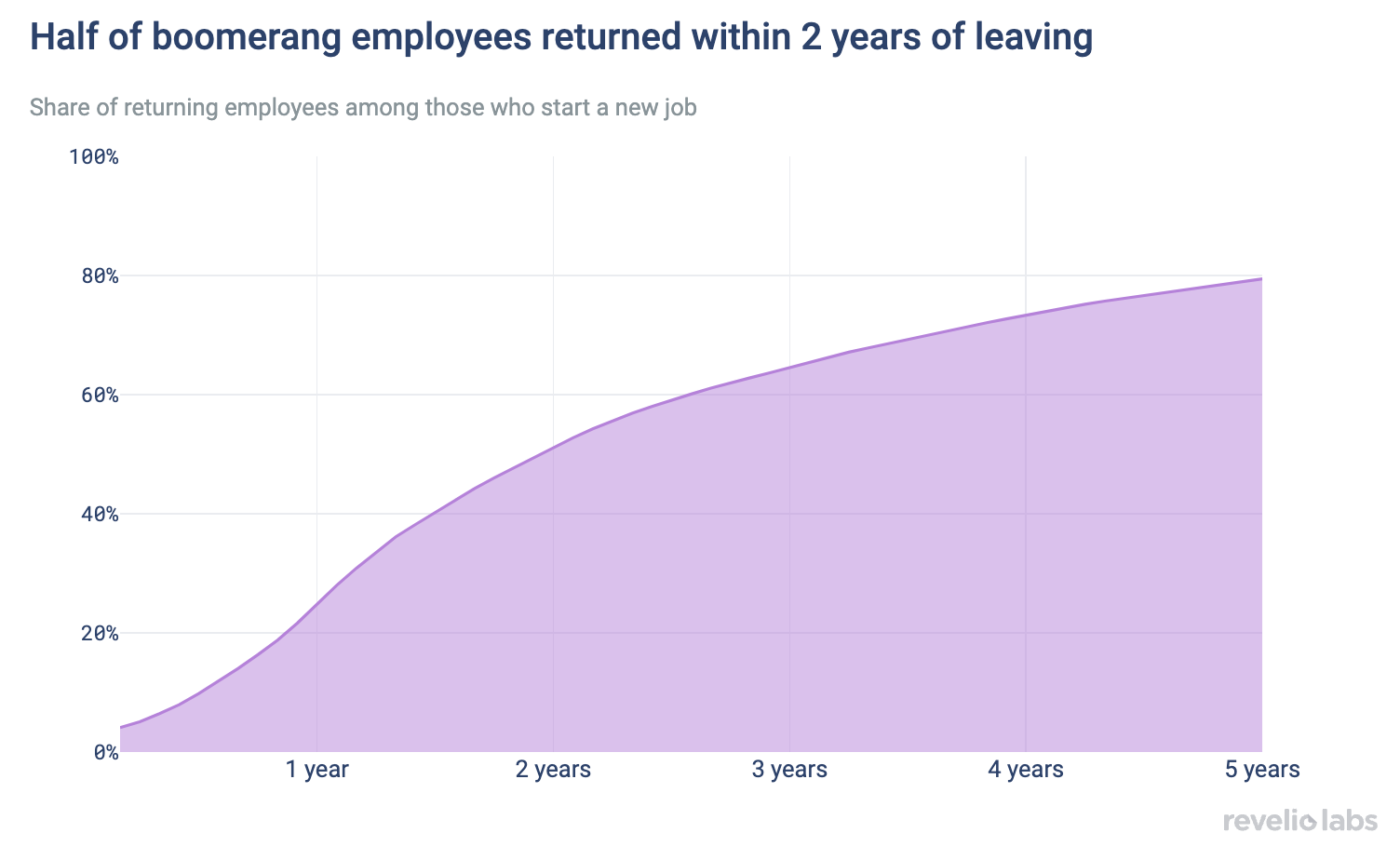
When do boomerang employees come back? We find that around 50% return within two years of their departure, and around 80% come back within five years. The experiences of employees in the first few years after separation may thus be important in determining whether or not they decide to return to their former employer.
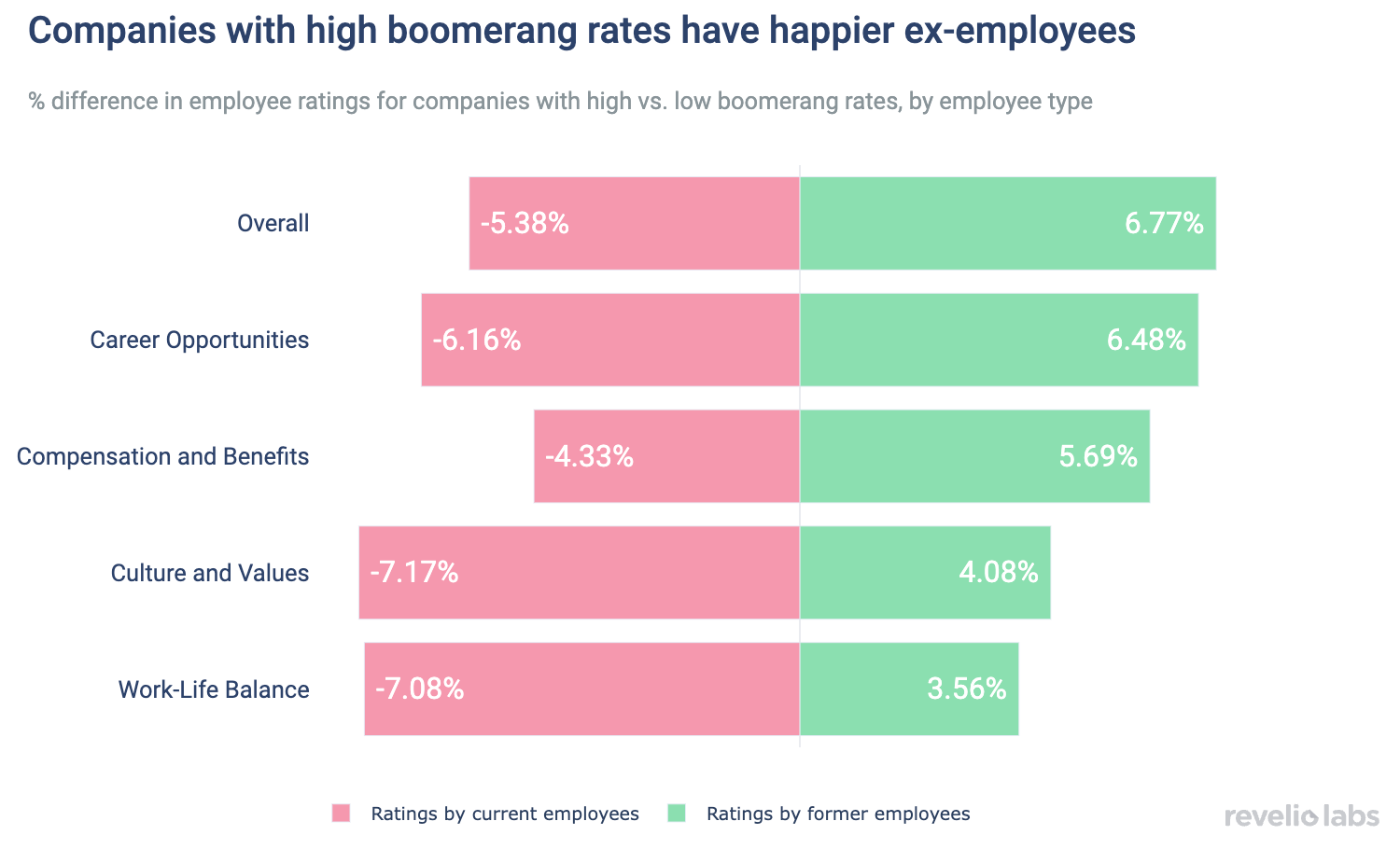
Finally, how do boomerang rates reflect employee sentiment? Interestingly, companies in the top quartile of boomerang rates in each sector tend to receive lower ratings from current employees across the board relative to those in the bottom quartile. This may indicate that employees who are happy in their current positions tend not to leave - and, consequently, tend not to boomerang. However, companies in the top quartile of boomerang rates are also rated higher than those in the bottom quartile by former employees: Thus, those who leave perhaps have realized the grass may not always be greener elsewhere.
Free to reproduce with attribution and a link to reveliolabs.com.
Cite this article
- Plain text
- Revelio Labs, "Is It Too Late Now to Say Sorry? …Cause I’m Missing More Than Just Your Money," March 19, 2024.
- HTML
- Revelio Labs, "<a href="https://www.reveliolabs.com/news/macro/is-it-too-late-now-to-say-sorry">Is It Too Late Now to Say Sorry? …Cause I’m Missing More Than Just Your Money</a>," March 19, 2024.
- Academic
- Hao, S. (2024, March 19). Is It Too Late Now to Say Sorry? …Cause I’m Missing More Than Just Your Money. Revelio Labs.


