Small businesses are the backbone of the US economy. According to Census data, small businesses with less than 250 employees made up 58% of the annual payroll in 2020. In a turbulent economy marked by high inflation and mass layoffs, how do small businesses fare when it comes to hiring? We recently talked to Bloomberg about our findings.
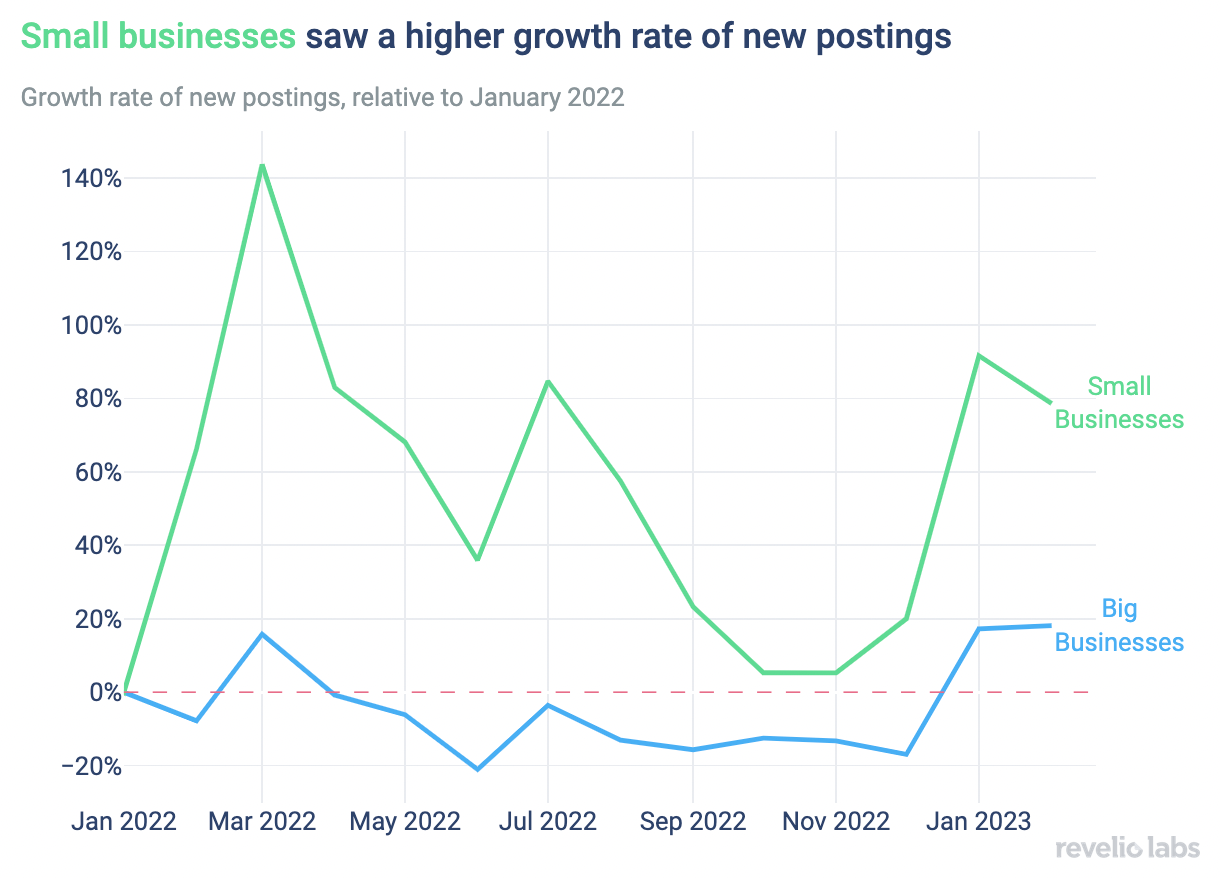
Small businesses’ labor demand remained strong in the recent months and the number of new job postings grew at a consistently higher rate than big businesses, Revelio Labs labor market analytics show. Even as the economy started to cool down in the second half of 2022, small businesses have continued to increase their number of new job postings at a greater rate than their larger counterparts.
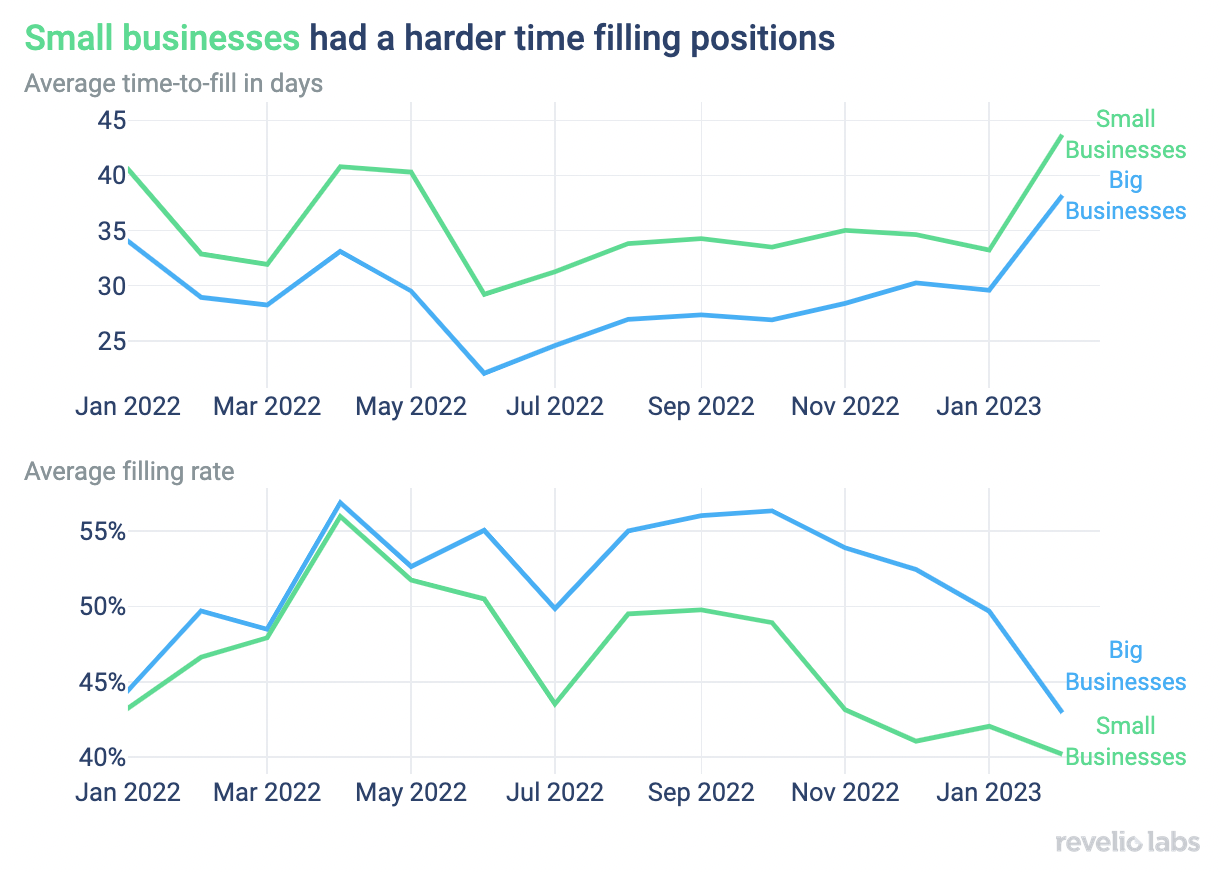
While the tight labor market poses challenges for employers of all sizes, recruiting has been particularly difficult for small businesses as they have limited resources to provide competitive wages and benefits. Small businesses’ longer filling times and lower filling rates–defined as the number of removed postings over the number of active postings in the previous month–show signs of hiring struggles. However, the gap has narrowed in recent months as big businesses started to experience hiring freezes and layoffs creating opportunities for small businesses to add talent.
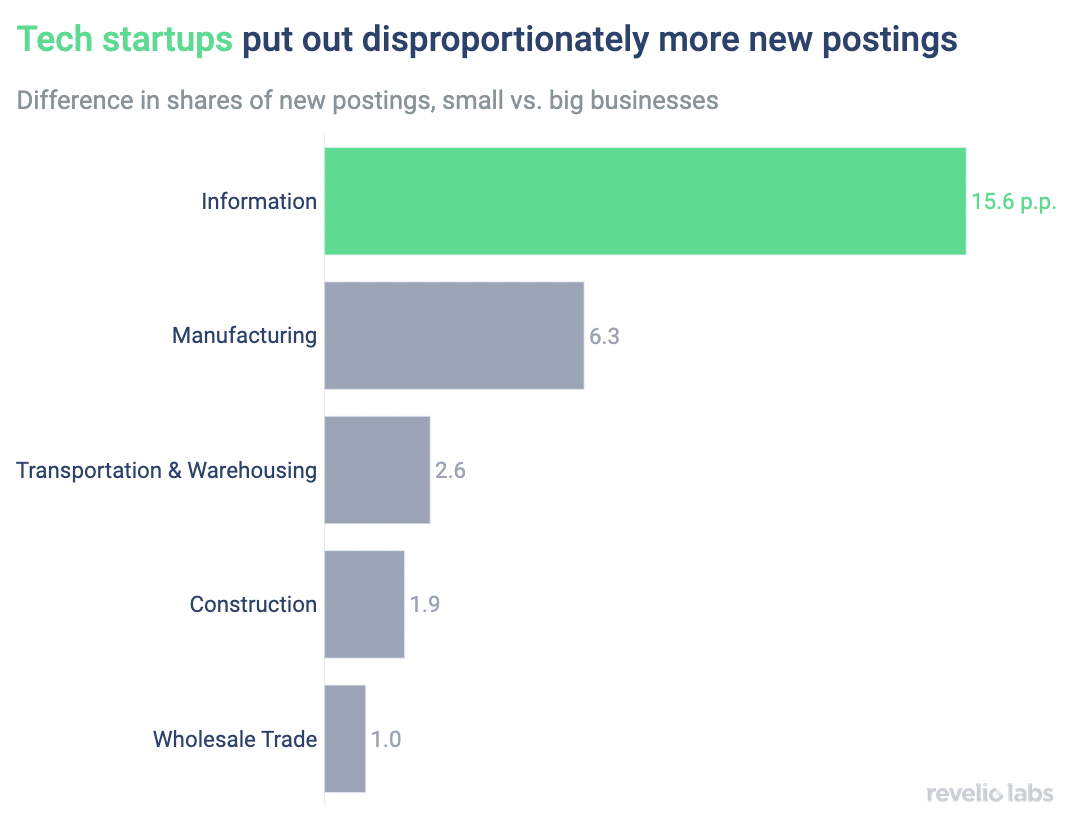
The recent tech downturn has also provided an opportunity for tech startups to finally attract and hire top talent. When we compare the differences in the share of new postings by sector between small and big businesses, our labor market analytics reveal that tech startups disproportionately put out more new postings since December 2022. Amid tech layoffs among the tech giants, tech startups are ramping up their recruitment efforts to find the best talent.