From Silicon Valley to the Seine: Europe is gaining tech workers
The cross-Atlantic tech brain drain has reversed



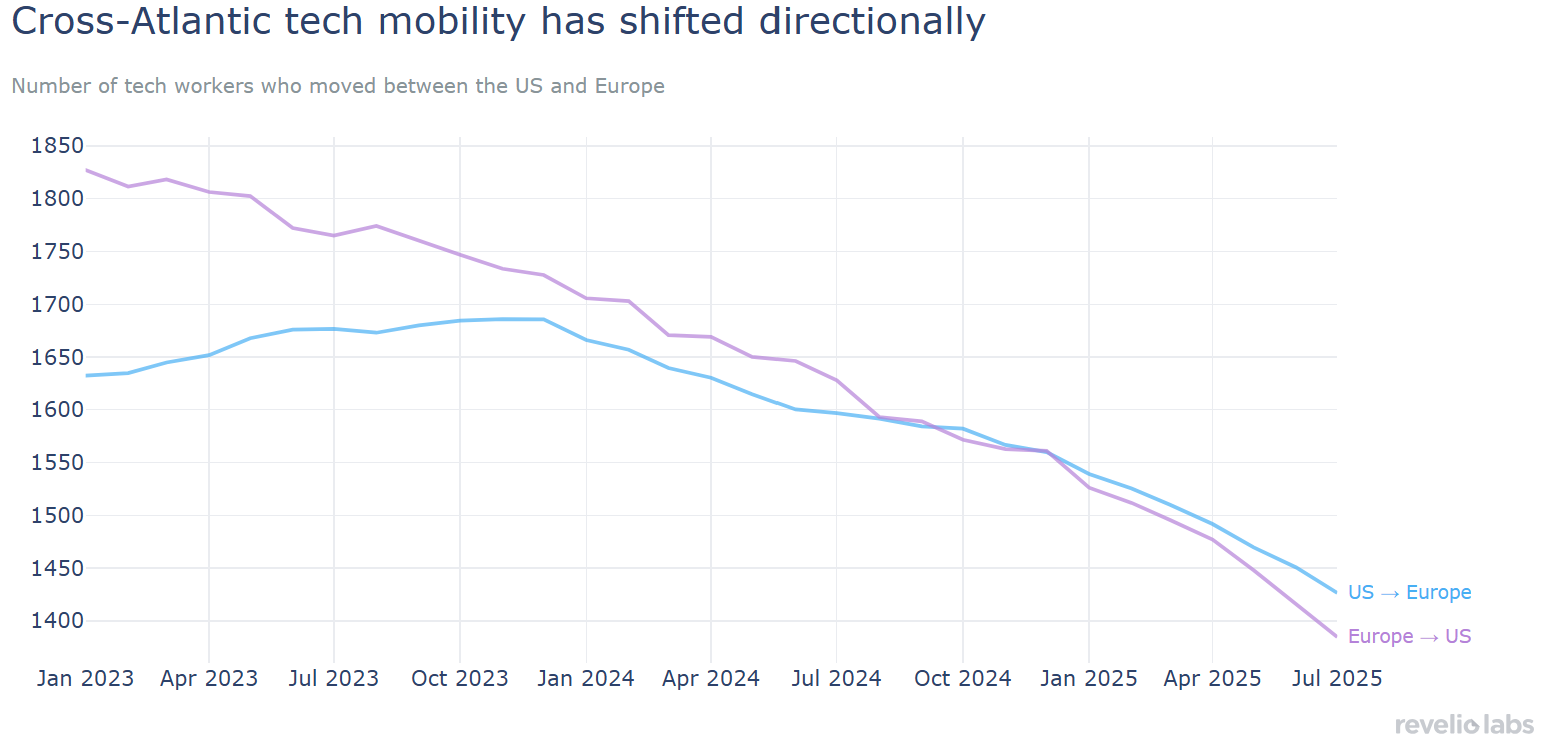
The direction of transatlantic tech talent is reversing. Although migration has slowed since 2023, the balance has flipped, with more tech workers now moving from the United States to Europe than the other way around.
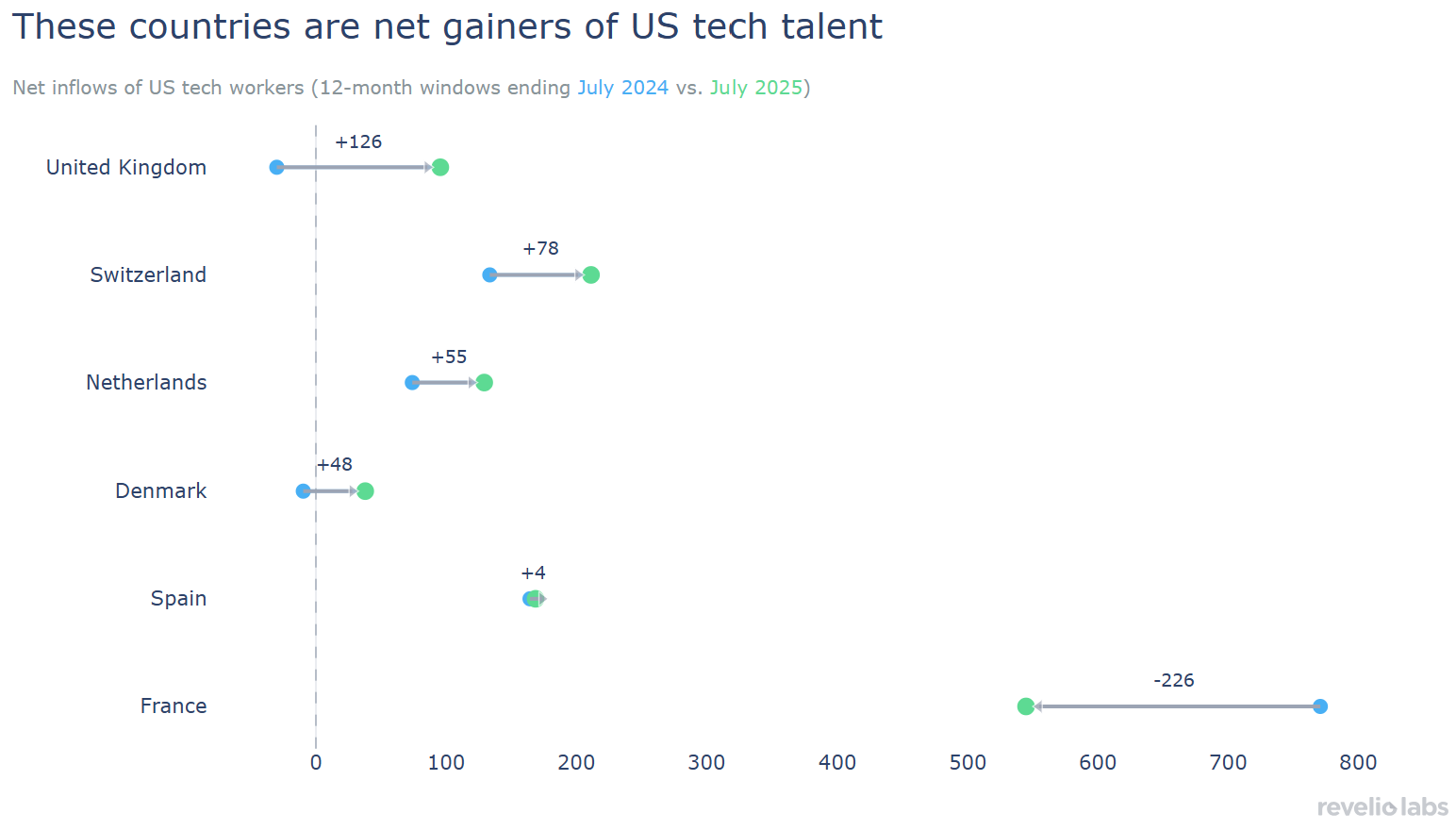
Several European countries are emerging as clear winners in the competition for tech talent. France, Switzerland, Spain, and the Netherlands have gained the most US tech workers over the past year.
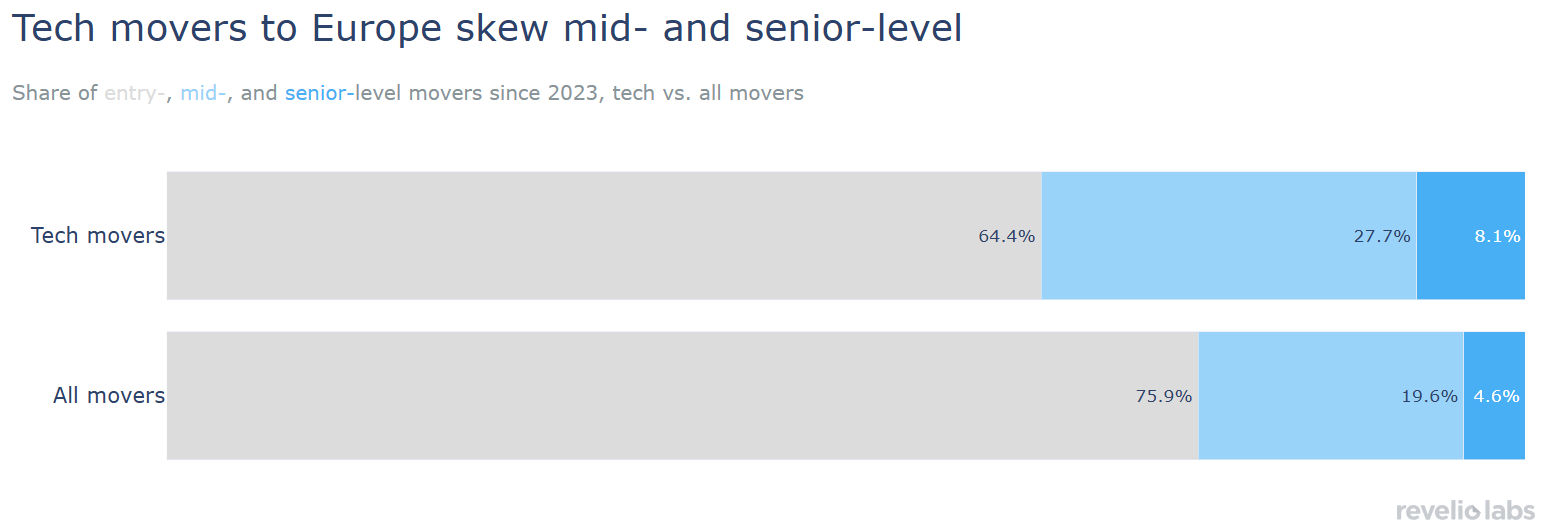
Tech workers moving to Europe are typically more experienced than the average mover and they often land higher in the local wage distribution.
In this week’s newsletter and in collaboration with The Economist, we examine labor market data to track the flow of tech talent between the United States and Europe. For decades, the United States has been the dominant destination for global tech talent. Silicon Valley and other US hubs have historically attracted engineers, researchers, and startup founders from across the world, including many from Europe. But global labor markets are evolving. The pandemic reshaped hiring patterns in tech, venture ecosystems have expanded outside the United States, and immigration policies continue to influence where workers can relocate most easily. At the same time, European tech hubs from Paris to Amsterdam have grown rapidly in recent years.
Using Revelio Labs workforce data, we analyze migration patterns, wage positioning, and the types of workers moving between the US and Europe. The results suggest that while overall cross-Atlantic mobility has slowed, Europe continues to attract experienced US tech talent and in many cases offers those workers stronger positions within local labor markets.
Cross-Atlantic tech migration has cooled noticeably since 2023. Both directions of movement, namely moves from Europe to the United States and from the United States to Europe, have declined over the past two years. But the balance between the two has shifted. Historically, Europe has been a net exporter of tech talent to the United States. Recently, however, the flows have converged and even reversed slightly, with US workers moving to Europe in greater numbers than tech workers in Europe heading west. This shift likely reflects a combination of factors: the cooling US tech labor market after the pandemic hiring surge, growing tech ecosystems across European cities, domestic US policies, and tighter immigration and visa dynamics shaping mobility decisions.

While the overall flow of workers has moderated, some European countries are clearly attracting more US tech talent than others. France stands out as the largest net destination, even as its inflows have declined. The United Kingdom and Switzerland are seeing the largest gains in US tech inflows, with Switzerland building on an already strong position. Spain also remains a major destination, though its recent gains are more modest. Meanwhile, the Netherlands and Denmark are gaining ground and trending upward. Several forces are likely driving these patterns. Expanding startup ecosystems, competitive compensation packages, and favorable immigration pathways such as the French Tech Visa have made many European tech hubs more attractive to internationally mobile workers. In addition, the normalization of remote and hybrid work has reduced the need to be located in traditional US tech centers.
Sign up for our newsletter
Our weekly data driven newsletter provides in-depth analysis of workforce trends and news, delivered straight to your inbox!
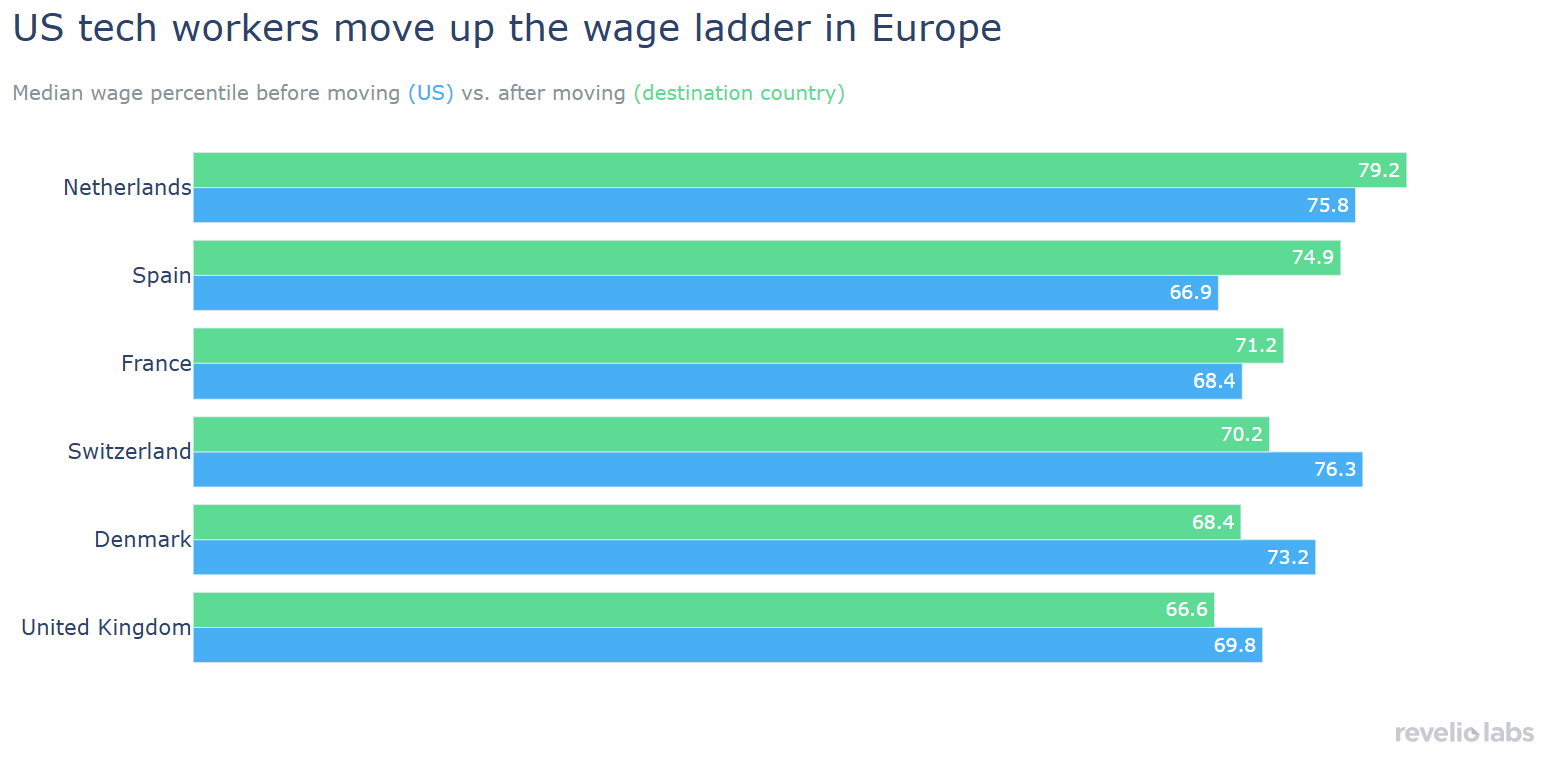
For many US tech workers, moving to Europe is not just a geographic shift; it also changes their position within their local labor market. Across several destination countries, the typical US tech mover lands at a higher or similar percentile of the local wage distribution compared to where they sat in their previous US metro. This means that while their absolute level of income decreases when moving from the US, they still feel richer in their new city compared to others. They also have a higher purchasing power due to lower costs of living. In Spain, for example, the median mover rises from roughly the upper two-thirds of the distribution to closer to the top quartile (around an 8-percentage-point increase). Smaller but still positive shifts are visible in France (about 3 pp) and the Netherlands (around 3-4 pp). Even in countries where movers enter at slightly lower percentiles than in the United States, they still tend to land relatively high in the local distribution. Overall, many US tech workers arrive with skills and experiences that place them higher in the earnings hierarchy regardless of the destination.
The composition of workers making the move also tells an important story. Compared with the broader population of US workers relocating to Europe, tech movers are significantly more likely to be mid-career or senior professionals. Part of this pattern may reflect broader shifts in the US labor market, where the “middle” of the workforce has become harder to sustain. For some, moving abroad offers a way to reposition themselves, take on larger roles, or access markets where their experience is more highly valued. All in all, cross-Atlantic tech mobility appears to be shaped less by early-career exploration and more by strategic moves by experienced workers, particularly those with specialized skills or leadership experience that European firms are actively seeking.
Taken together, these patterns point to a subtle but meaningful shift in global tech mobility. Europe is not replacing the United States as the world’s dominant tech hub. But its ecosystems are becoming increasingly competitive in attracting experienced international talent, especially in a post-pandemic labor market where geography matters somewhat less than it once did. For policymakers and companies alike, the implication is clear: The competition for tech talent is increasingly global. Countries that combine strong local tech ecosystems, accessible immigration pathways, and competitive labor market opportunities are likely to capture a growing share of the world’s most mobile workers.