The Gig Work Gender Gap
Women enter gig work at higher rates, but price their work lower


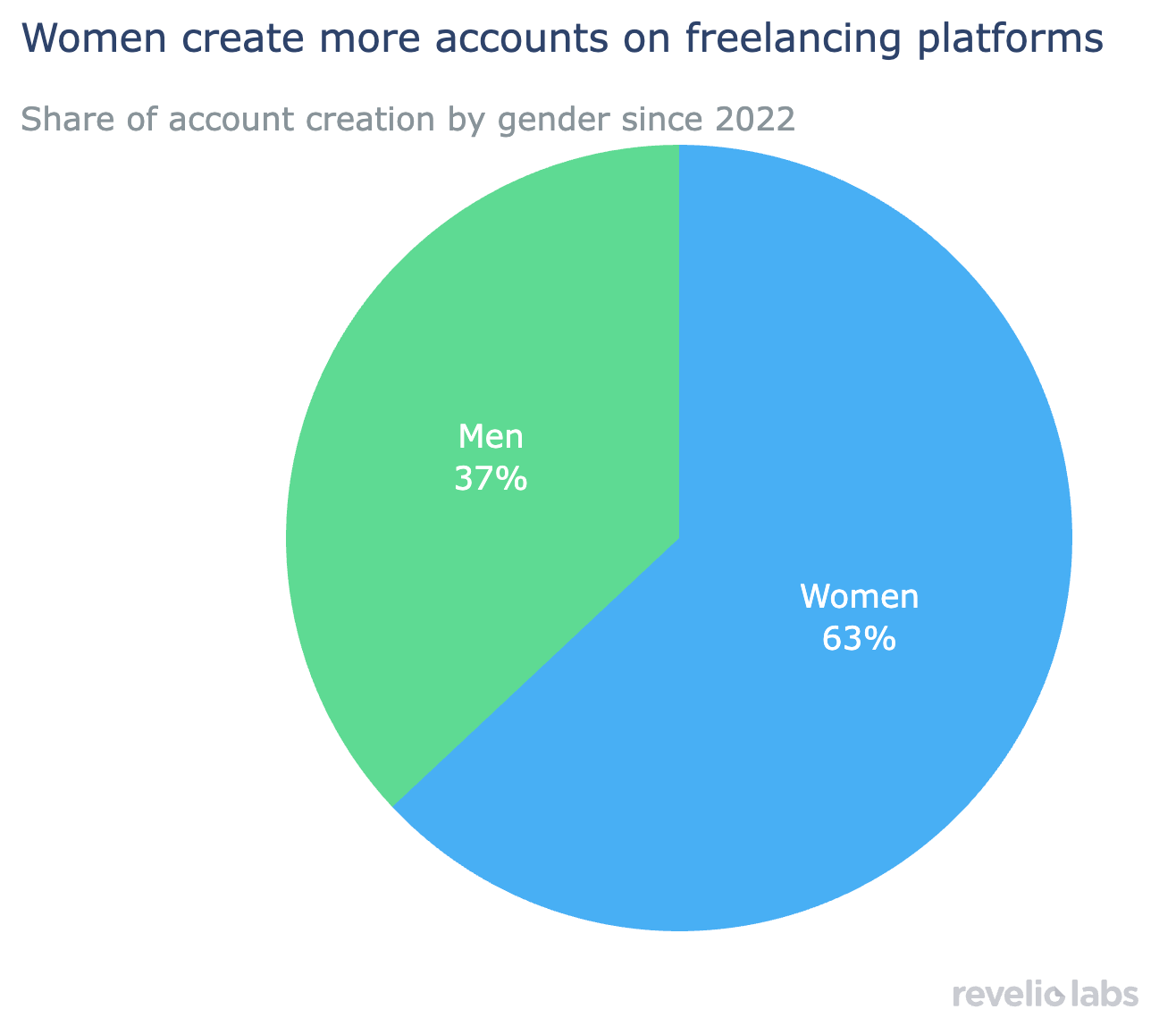
Women dominate freelancing work, with roughly 63% of accounts on Upwork, a freelancing marketplace, created by women.
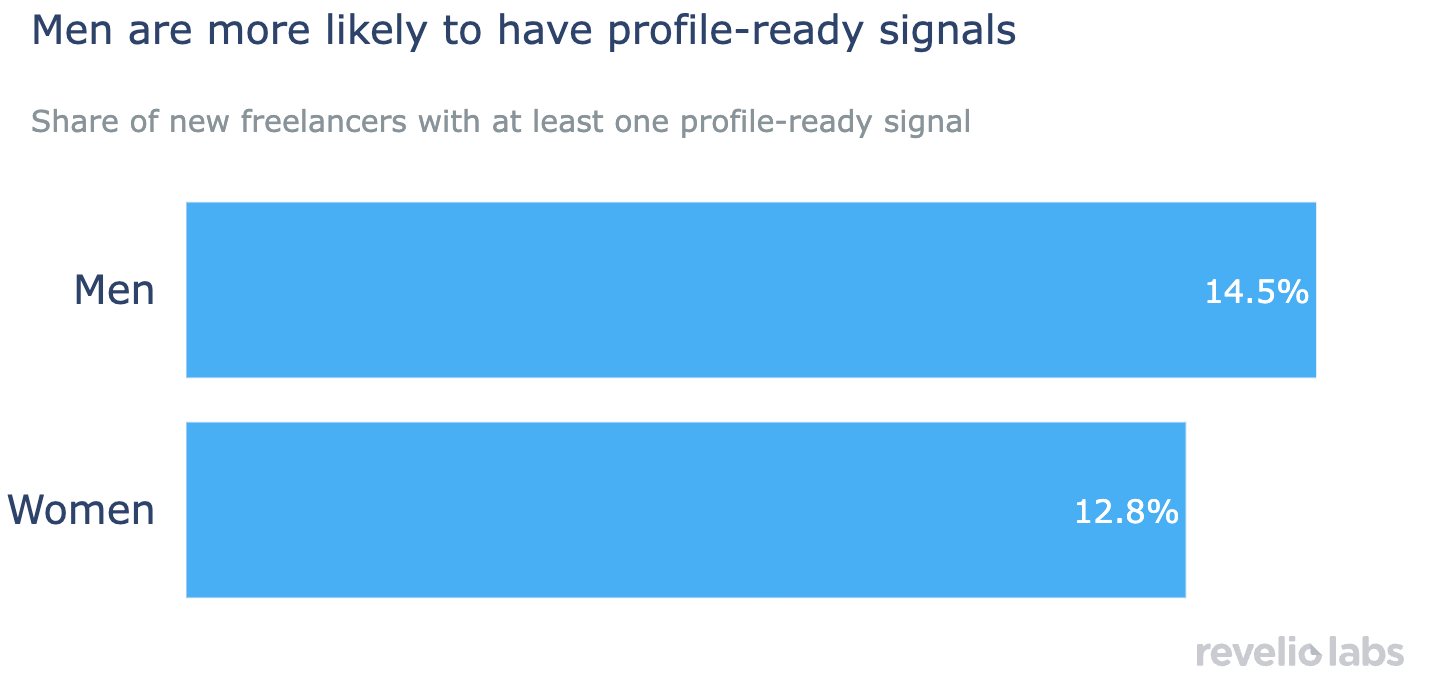
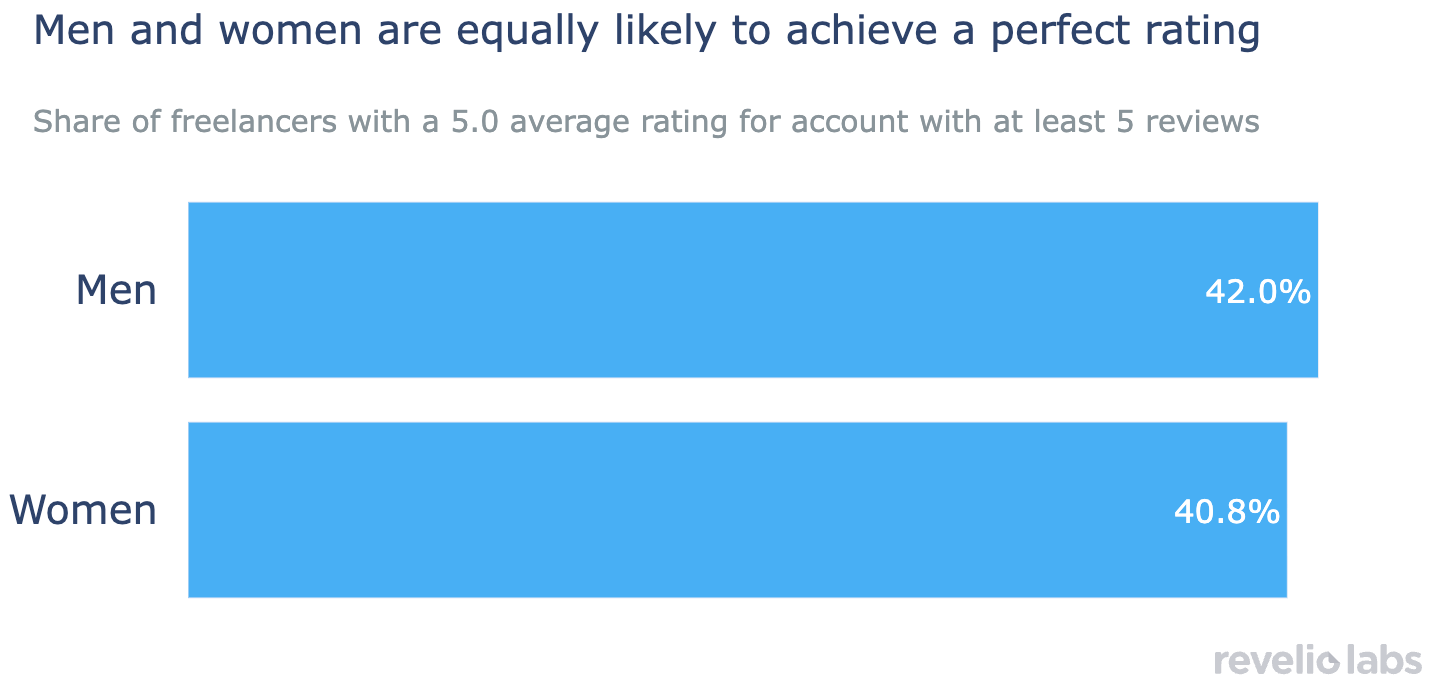
Women are less likely than men to possess the profile signals platforms reward, such as identity verification, portfolio items (such as completed projects or past projects), or skills tests. Yet both genders are equally likely to achieve a perfect 5.0 rating, suggesting the platform does not systematically disadvantage women in matching or evaluation.
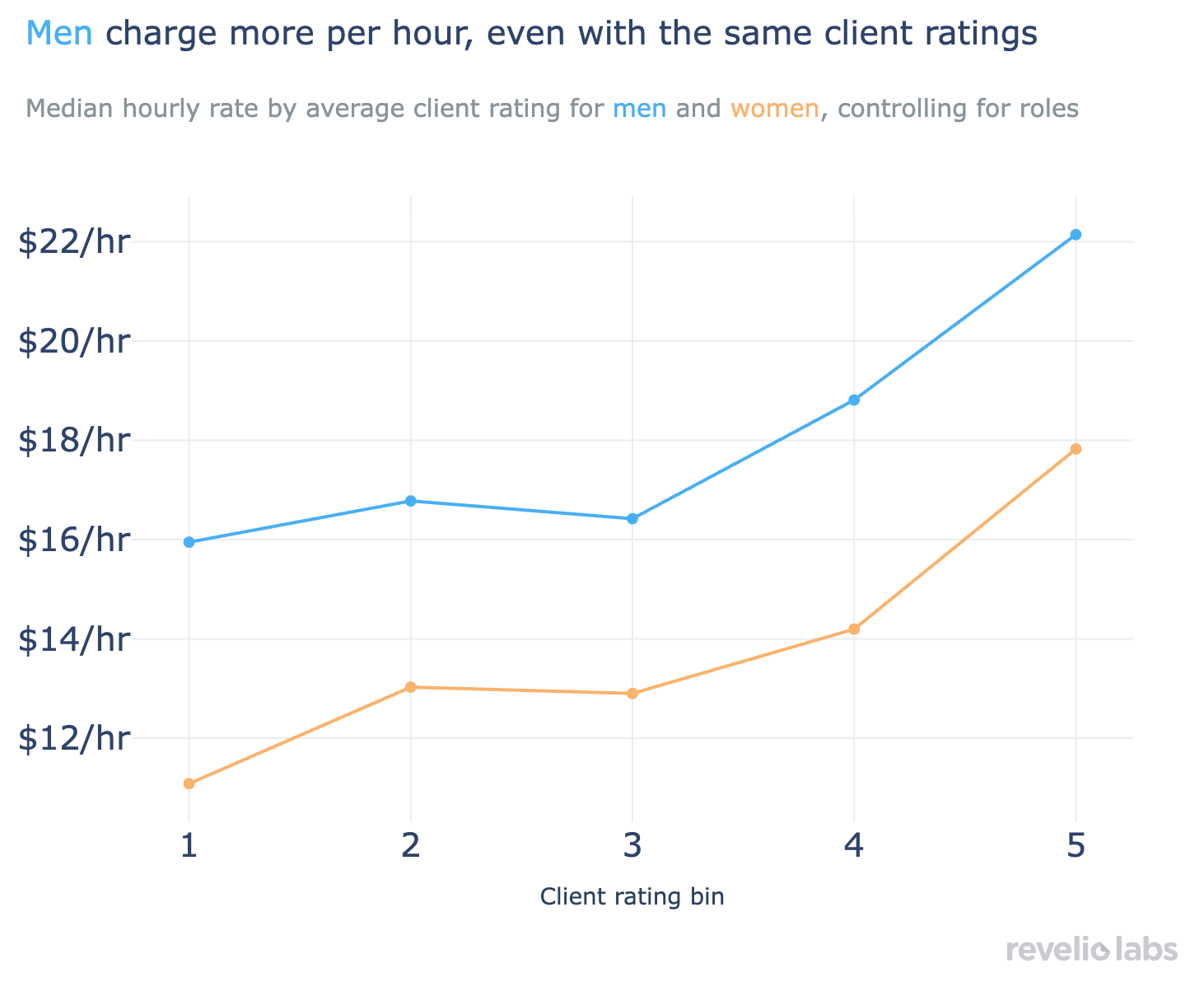
Men charge more per hour than women, and the gap widens with experience, even among freelancers with similar ratings and project counts. This is not due to barriers at entry or bias in evaluation. Rather, it may be a story of confidence: men price ambitiously, while women price to win. Women may set lower rates not because they undervalue their work, but because they prioritize securing projects over maximizing earnings.
The gig economy promised a level playing field, with no gatekeepers, resumes, or interviews, only skills, reputation, and the willingness to compete. But equal access doesn't guarantee equal outcomes. This week, we examine gender differences in the US gig economy using detailed data on freelancers from Upwork, a platform where work is specialized, skill-driven, and crucially, where workers set their own rates. Because the platform shows participants' names, we use Revelio Labs' proprietary model to infer gender.
The gender pay gap persists in the gig economy too, but where does it actually show up? Since 2022, women have made up roughly 63% of freelancing accounts on Upwork; a split that has remained stable over time. This suggests that the gender gap in freelancing doesn't originate at the point of entry. Women are entering the gig economy in force, which means that any disparities in outcomes between men and women can't be attributed to unequal participation.

Yet men and women don't start their freelancing career in the same way. Men are more likely to create an account with at least one visible marker of readiness, such as identity verification, at least one portfolio item, or a completed skills test. Nearly 15% of accounts created by men display one of these signals at entry, compared to about 13% of accounts created by women. This gap matters because these are precisely the signals the platform rewards. Despite this difference, men and women are equally likely to land at least one project within the first 30 days of opening the account, and accumulate a similar number of projects over time. This indicates that the platform treats all newcomers equally. But signaling at entry is only part of the story. What happens once the work begins?
Once freelancers land a project and complete the work, men and women perform similarly. Among freelancers with at least five completed contracts, men are slightly more likely than women to hold a perfect 5.0 average rating: 42% of men achieve a perfect score, compared to ~41% of women. The equal share of men and women achieving a perfect 5 rating indicates that there is no systematic difference in how clients perceive the skills of men and women. Both are equally likely to complete the assigned jobs with satisfactory performance.
The gender gap in gig work becomes most visible in pay. Even when reputation signals are comparable, men are more likely to translate them into higher posted rates. Higher client ratings are associated with higher posted hourly rates for both men and women. But men post higher hourly rates at nearly every rating level, and that gap persists, even after controlling for roles.
It's worth noting that these are advertised rates, not necessarily what clients ultimately pay. Even at the highest levels of reputation, women, on average, attach lower prices to comparable credentials than men do. The reputation is the same; the price tag is not.
Both men and women raise their posted rates as they complete more projects and gain more experience, but not at the same pace. Both men and women start out pricing themselves relatively high, perhaps overestimating their market value before they have a track record to back it up. After completing their first one or two jobs, both groups actually lower their rates, suggesting a reality check: landing work may matter more than holding firm on price. Once they have a few projects under their belt, confidence returns and rates climb steadily with experience. Yet, comparing men and women, the gap exists from the outset. Men consistently advertise a higher hourly rate, even after controlling for roles. What's striking is how the gap evolves with experience: while both groups recover and increase their rates after the early dip, men do so at a steeper pace. By the time a freelancer has completed ten or more jobs, men list roughly $5/hr more than women in equivalent roles. The gap is not just persistent but widens further with experience.
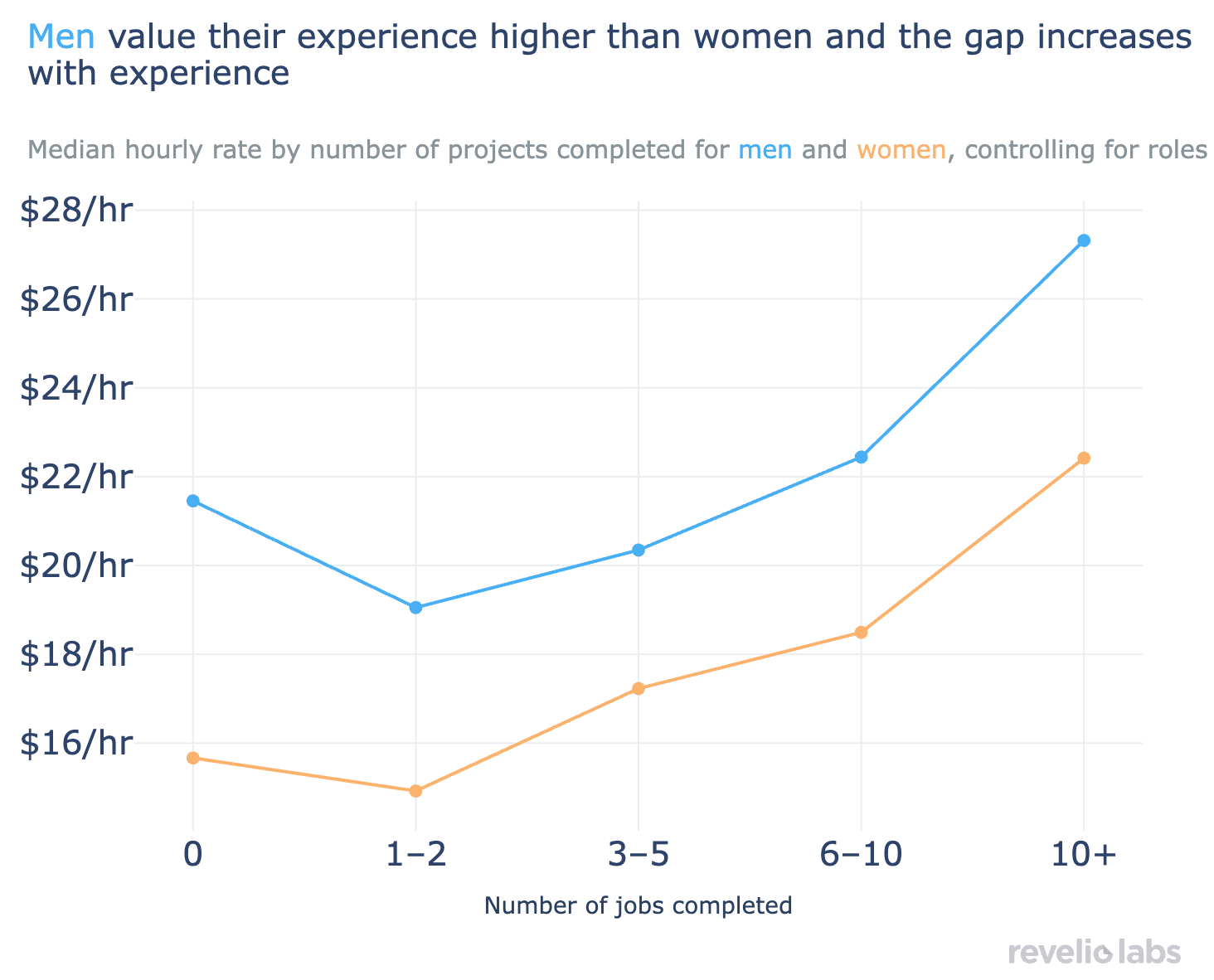
This is where the gender dynamics of gig work actually emerge, not at the point of entry, where women participate in equal or greater numbers, but in how experience and reputation are translated into financial reward. The data here shows no systematic discrimination on the platform itself, but despite that, women are less likely to price themselves higher. Understanding why requires looking beyond Upwork alone.
The gender pay gap we observe on Upwork is consistent with findings from other gig platforms. Cook, Diamond, Hall, List, and Oyer found that male Uber drivers earn 7% more per hour than female drivers. Like Upwork, Uber does not discriminate at entry: both men and women have similar opportunities to sign up and start driving. However, unlike Upwork, Uber's pay algorithm is fixed and gender-blind, meaning workers have no control over the price of their labor. In that setting, the gap is explained by behavioral differences: experience on the platform (men drive more hours per week so they accumulate experience faster), preferences over where to work (women tend to avoid high-crime areas and areas with more bars, even though these locations carry earnings premium), and preferences for driving speed. A similar pattern emerges in an entirely different gig context: Litman and co-authors found that women earned 10.5% lower per hour than men on Amazon's MTurk. Unlike Uber, MTurk workers perform homogeneous tasks at prices set exclusively by the requesters who post the work. The gender pay gap in the case is explained by the tendency of women to sign up for tasks that have a lower advertised hourly pay compared to men.
On Uber, workers cannot set their own price. On MTurk, prices are set by employers. On Upwork, freelancers set the price themselves, and that is precisely where the gap lives. Why do women consistently price themselves lower, even when their reputation and experience are comparable to men's? One possibility is deliberate risk hedging: in a market where a single bad review or a string of empty weeks can derail a freelancing career, setting a lower rate may be a rational strategy to guarantee a steady flow of work. A filled calendar at $18 per hour may feel safer than an uncertain one at $22 per hour. Women may also be responding to learned signals about what the market will bear for them specifically. If early bids at higher rates go unanswered, the rational response is to adjust downward and anchor there. There is also a broader cultural dimension: Research consistently shows that women are less likely to negotiate aggressively in traditional labor markets, and that tendency may carry over into the gig economy, where every posted rate is a public opening bid. Finally, there may be something self-reinforcing at play. Women who price conservatively land more projects early, accumulate reviews faster, and build reputation, but at the cost of establishing a lower earnings baseline that becomes harder to move over time. Whatever the mechanism, the pattern is consistent: In a market designed to reward skills, experience and reputation, women and men bring comparable merit to the table, but attach a different price to it.
Freelancing platforms reduce traditional hiring frictions by replacing resumes and interviews with observable signals such as reviews, portfolios, and completed projects. Yet our results, along with other results in the literature suggest that despite the gig economy is not by itself a solution for gender-based pay gaps. When access is equitable and performance signals are comparable, the gender gap in earnings persists. The gender pay gap in gig work is not a story of discrimination or unequal opportunity; it is a story of how confidence, risk tolerance, and learned market expectations shape the price tag a worker attaches to their own reputation. The gig economy doesn't eliminate the gender pay gap; it shifts it from hiring decisions or performance evaluations to the rates workers set for themselves. Closing that gap may require more than removing barriers to entry. It may require changing how workers, particularly women, are supported in valuing and asserting their own worth.