


Over the past two years, the external labor market has shifted out of its post-pandemic expansion phase. The conditions that supported high mobility, rapid hiring, and strong wage growth have reversed, replaced by slower mobility, tighter hiring standards, and weaker pay gains. To understand how these changes are affecting workers, we analyze external job-to-job transitions among white-collar workers. In an accompanying article with Business Insider, we explore how these dynamics are playing out on the ground.
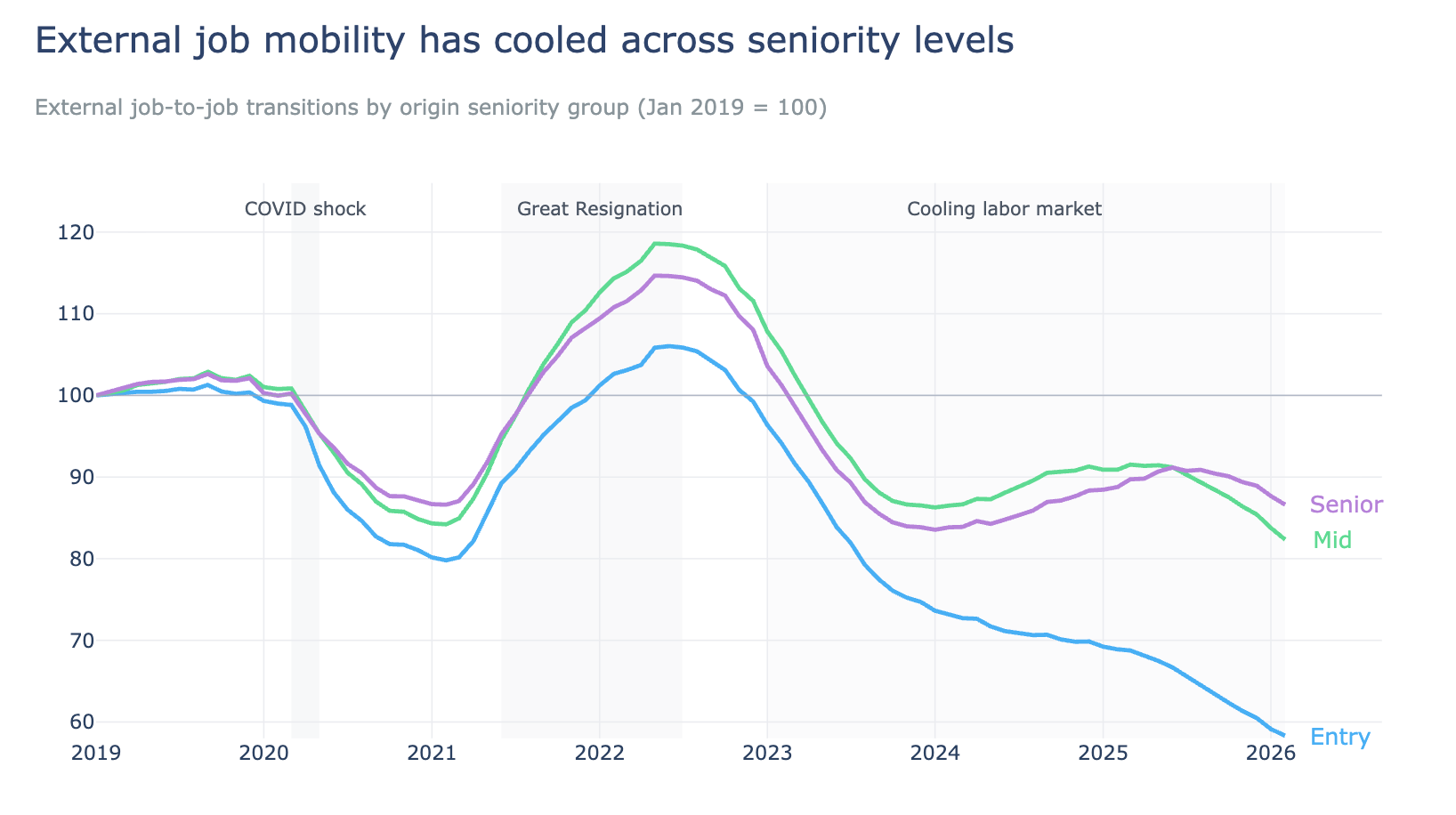
The era of easy job-switching is over. White-collar workers are changing employers at rates well below what was normal before the pandemic, and mobility has yet to recover. The drop is most pronounced for entry-level workers, whose mobility now sits roughly 40% below 2019 levels, while mid- and senior-level workers have seen more moderate pullbacks. This widening gap suggests that early-career workers are disproportionately exposed to tightening hiring conditions, as firms tend to pull back on junior hiring first. Entry-level roles carry higher training costs and greater uncertainty around fit, making them the first to see reduced demand when hiring slows. We have previously documented this contraction in entry-level hiring, particularly in the context of AI adoption and the changing role of junior workers in production processes.
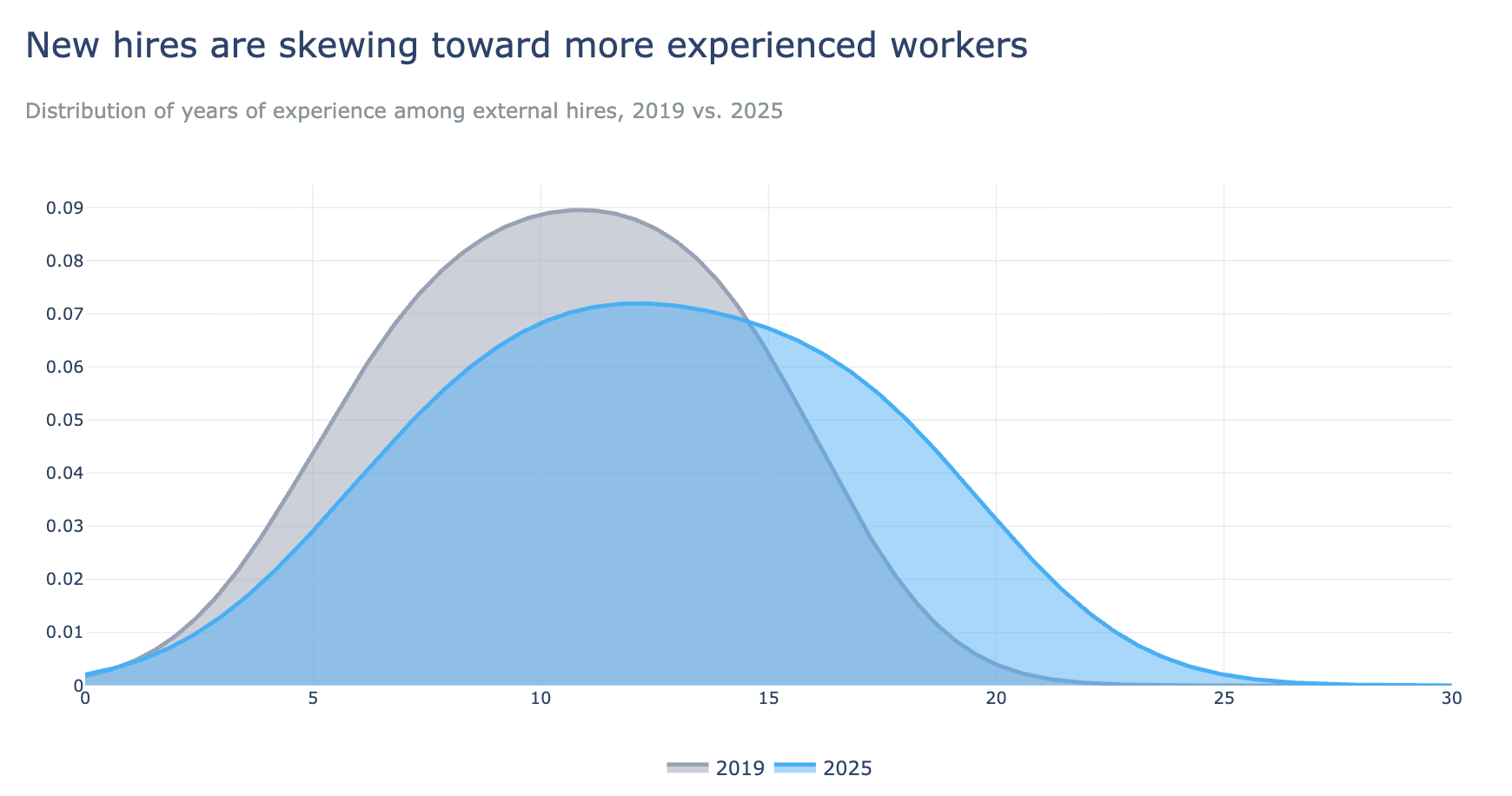
A second shift is visible in how much experience hires have. Since 2019, the distribution of experience among new hires has shifted upward, with fewer early-career workers and a growing concentration of hires at higher experience levels getting hired. On average, external hires today bring roughly two additional years of experience compared to 2019, raising the effective experience threshold for new roles. This pattern holds across seniority groups, pointing to rising hiring bars as firms increasingly prioritize candidates who can contribute immediately rather than investing in training. This shift is consistent with broader signs of a weakening white-collar labor market. This is consistent with the broader white-collar squeeze we've documented: fewer postings, stagnant wages, and now narrowing internal pathways too. At the same time, internal pathways are also narrowing. Promotion rates have declined since 2022, limiting opportunities for advancement even among workers who remain employed.
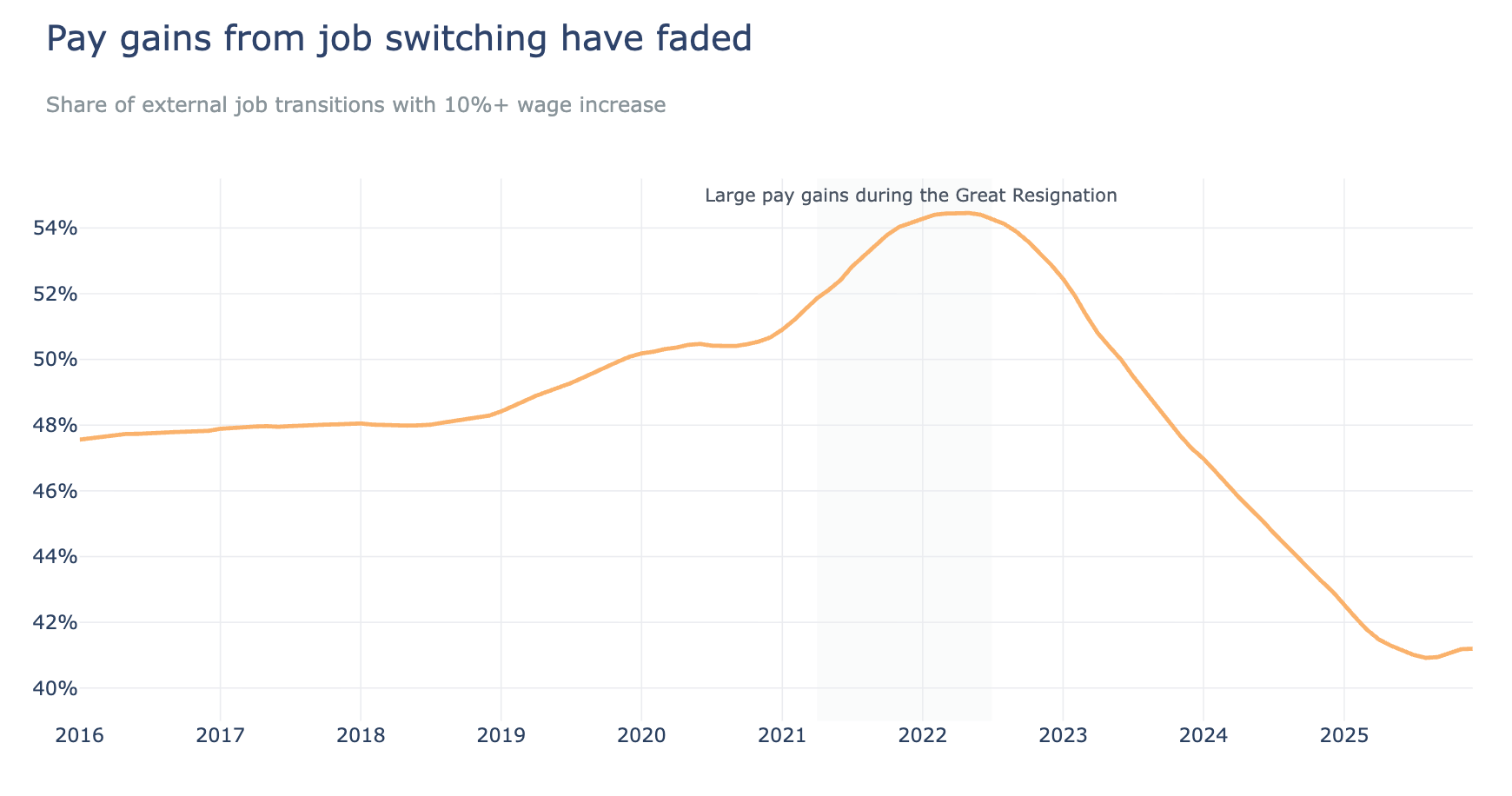
The third shift is in the payoff to switching jobs. During the 2021–2022 hiring surge, job changes were frequently accompanied by large wage gains, but that premium has faded. The share of external moves delivering double-digit pay increases rose from roughly 48% in the mid-2010s to a peak of about 54% in 2022, before falling to roughly 41% in 2025. The wage premium from switching jobs has largely returned to pre-pandemic levels. With fewer outsized pay gains available, the financial incentive to switch jobs has weakened, reinforcing the broader slowdown in mobility.
These trends point to a clear rebalancing. External mobility is down, hiring standards are up, and pay gains have normalized. Importantly, these shifts are not evenly distributed. Entry-level workers face both fewer opportunities to move and higher barriers to entry, while firms increasingly concentrate hiring on more experienced candidates. The result is a labor market that is still functioning, but far less dynamic and far less forgiving than it was just a few years ago.


