Is the Workplace Undergoing a Mental Health Revolution?
Mental health benefits are finally on the rise


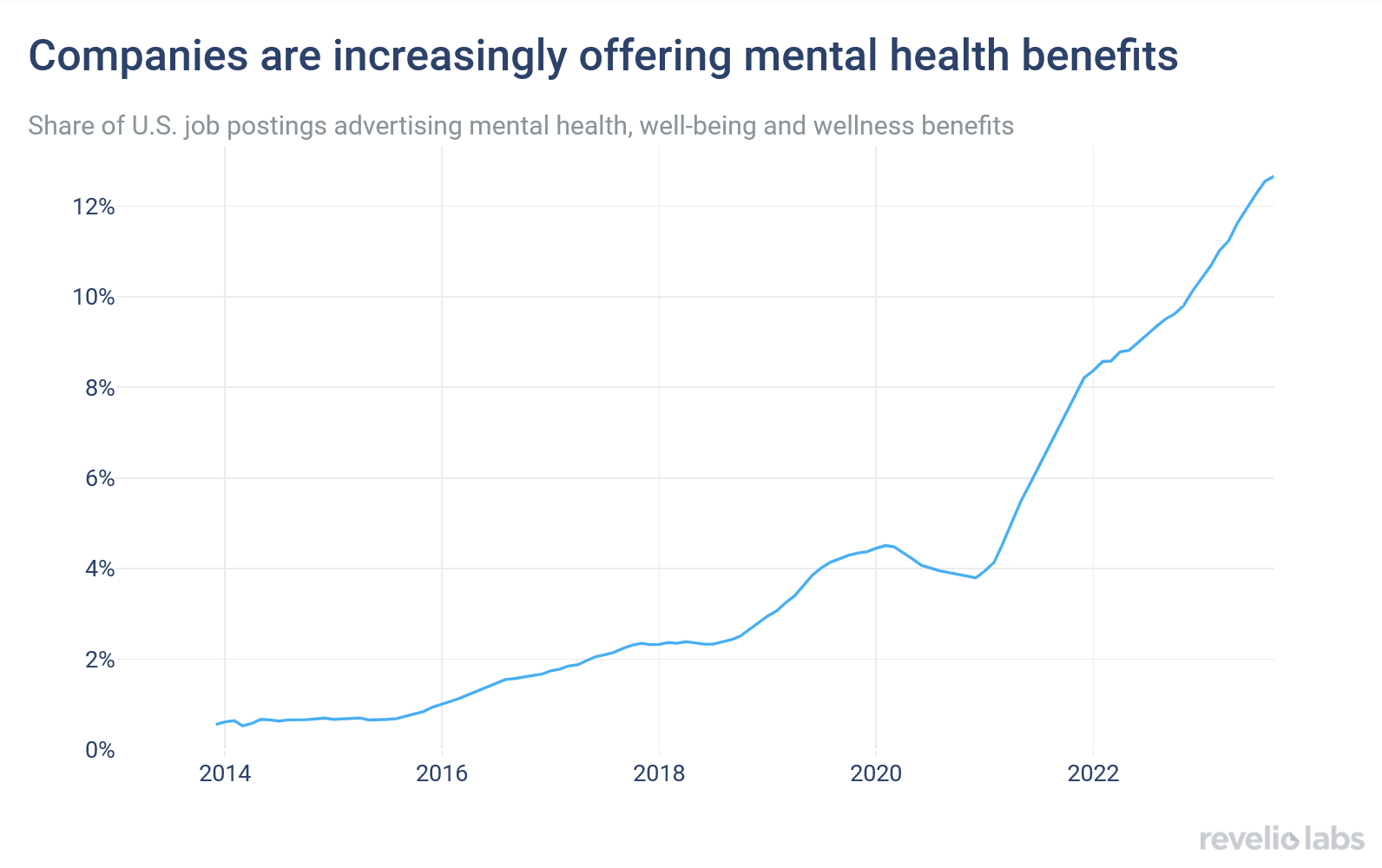
Since 2020, the share of U.S. job postings advertising mental health and well-being benefits has tripled.
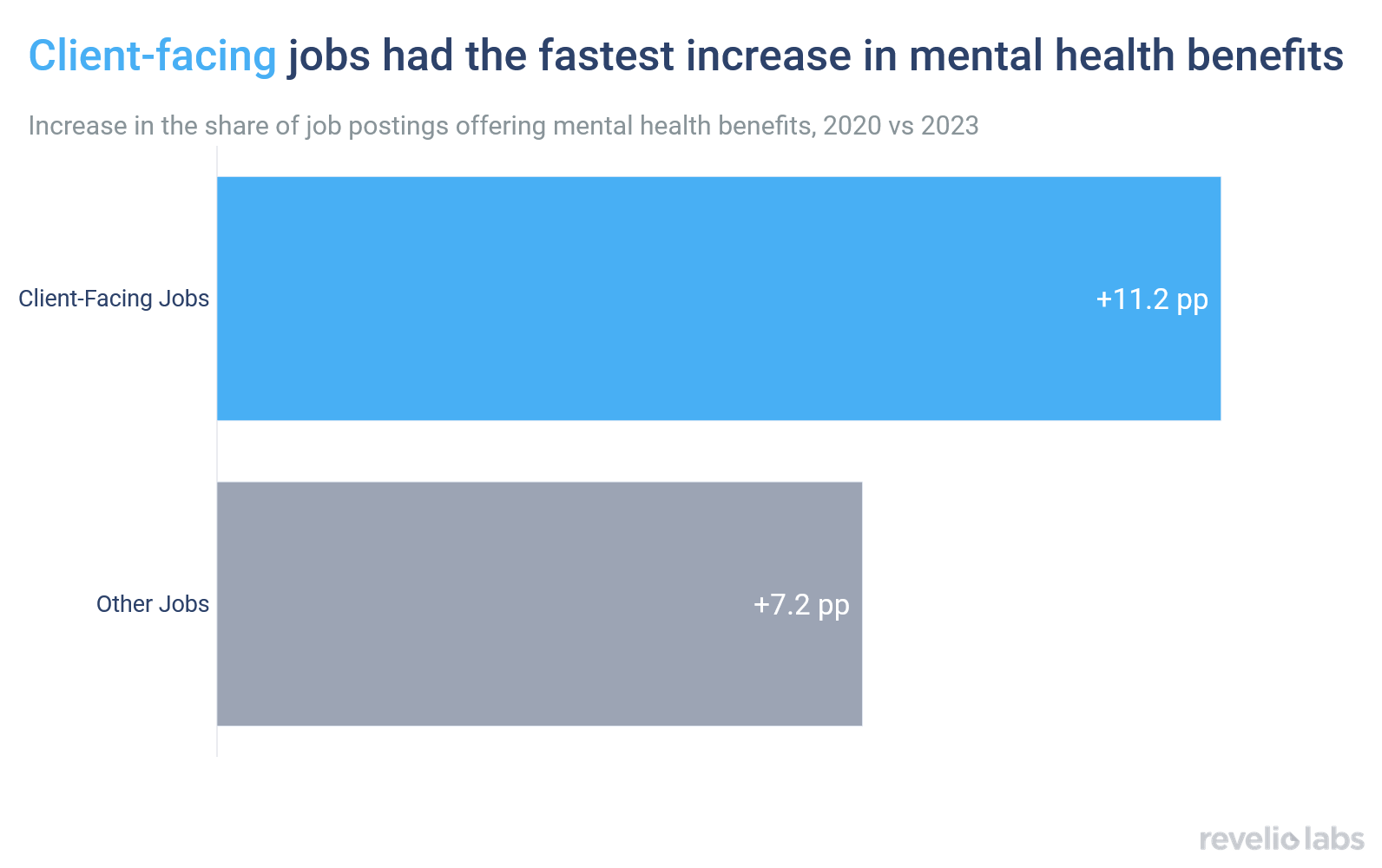
Mental health benefit offerings increased the fastest for client-facing roles. Employees in these roles are also twice as likely to mention well-being and mental health challenges in negative reviews compared to those with less direct client interaction.
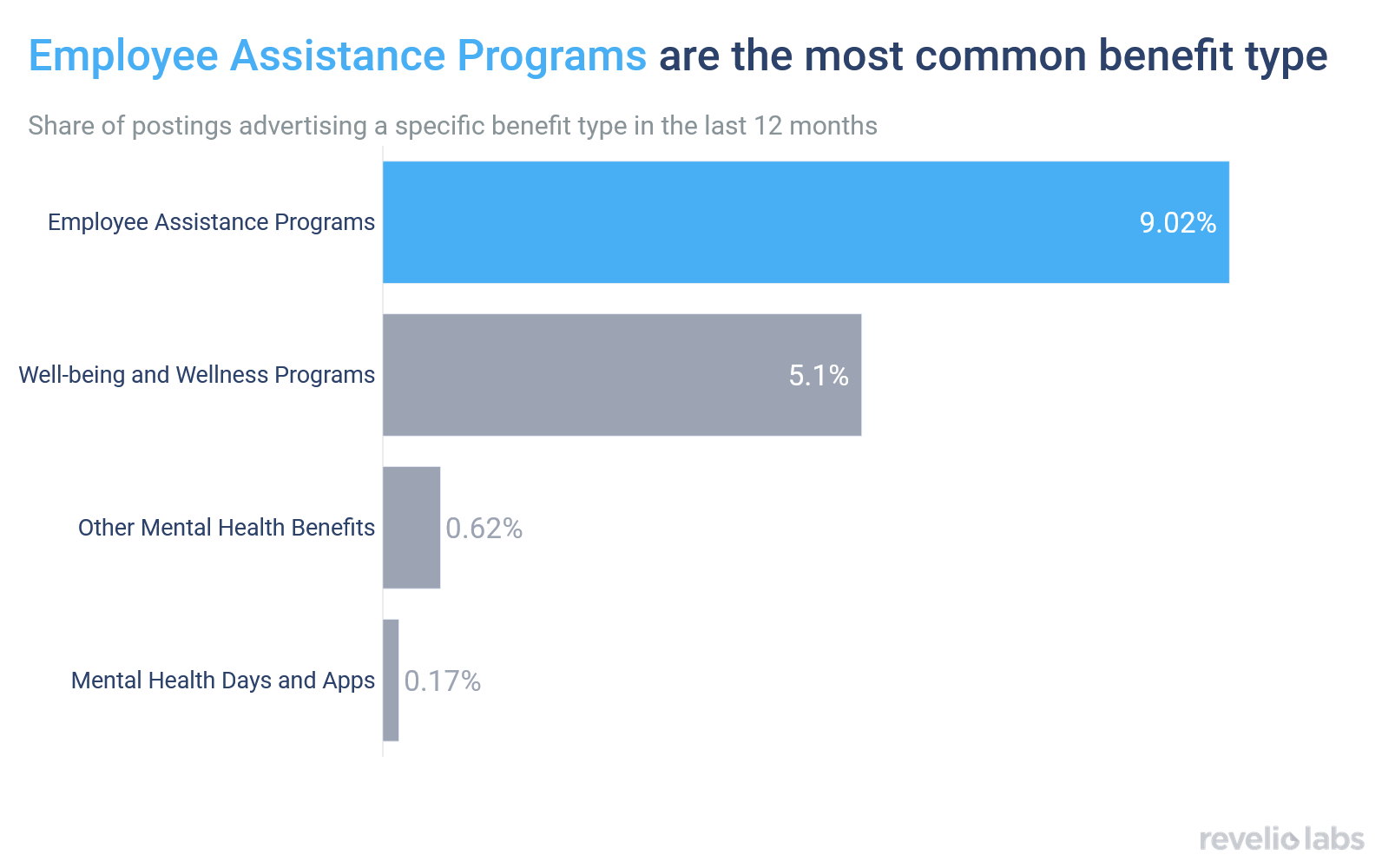
Employee Assistance Programs are by far the most commonly advertised mental health benefit type, followed by wellness and well-being programs.
Today is Mental Health Day, an international day for mental health education, awareness, and advocacy against social stigma. A vital component of one's mental well-being lies in experiencing positivity within the workplace and the impact of poor employee mental health on employee turnover and productivity cannot be overstated. What are the steps that companies are taking to address employees’ mental health, and how are employees faring in this regard?
The pandemic was a turning point for employers recognizing the importance of employees’ mental health. In January 2020, only 4% of job postings in the United States included mentions of mental health benefits. However, as of August 2023, our workforce intelligence data show that this figure has soared to 12%, marking a threefold increase in just three years.
Though this trend applies to all job categories, it's especially pronounced in client-facing roles. Relative to 2020, the share of job postings featuring mental health benefits for these positions has increased by 11 percentage points, amounting to a 55% greater rise compared to other roles.
Sign up for our newsletter
Our weekly data driven newsletter provides in-depth analysis of workforce trends and news, delivered straight to your inbox!
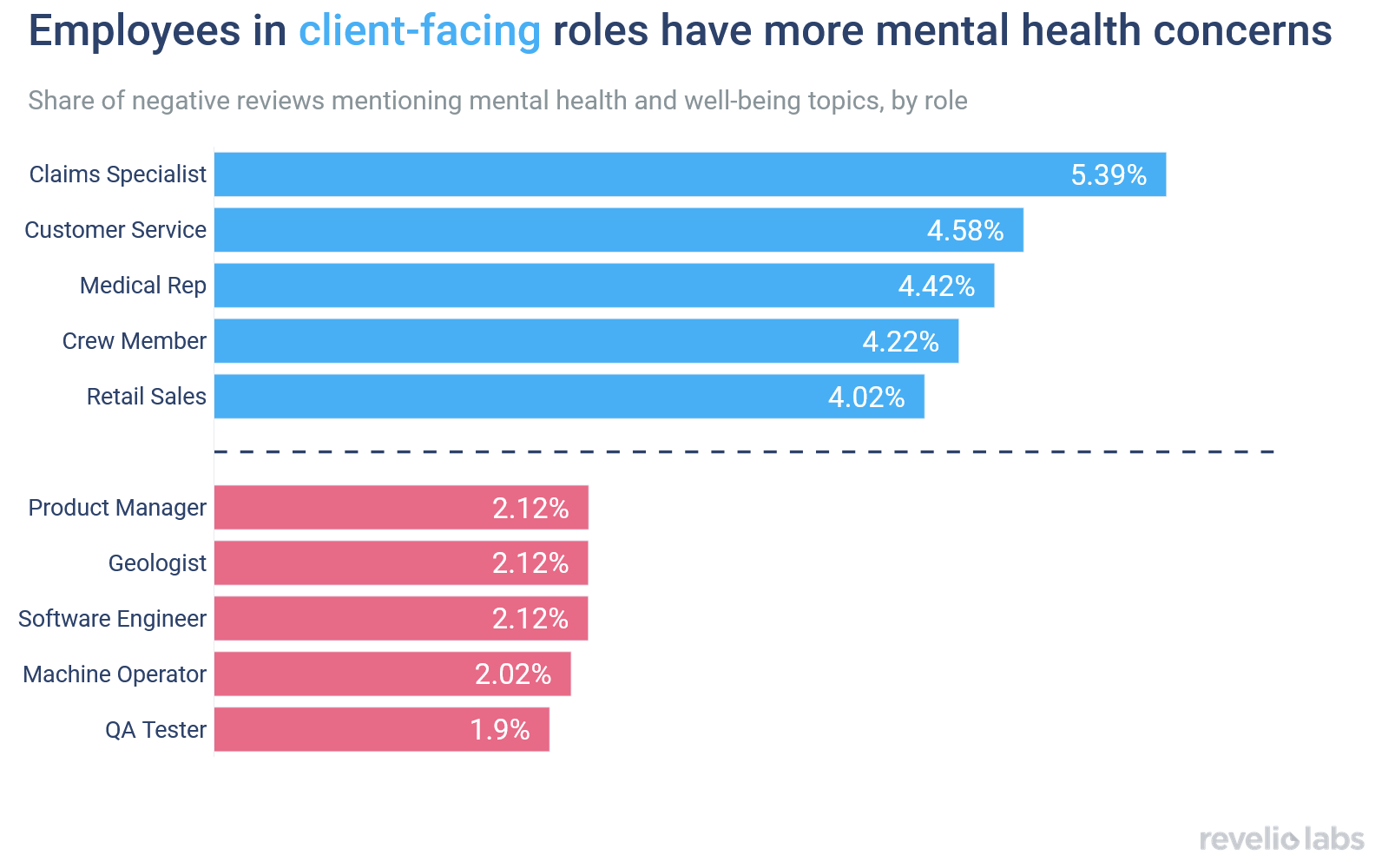
Among other things, this may be a response to the fact that client-facing roles bear the brunt of work-related stress. According to employee reviews, client-facing roles frequently top the list of positions subject to the highest levels of mental strain. Approximately 1 in 20 employees in roles such as claim specialists or customer service representatives discuss well-being or mental health challenges in negative reviews. This is over twice the rate of mentions than roles that have fewer client interactions such as machine operators and QA testers.
Finally, what are the most popular types of mental health benefits currently being offered? Employee Assistance Programs (EAP), work-based programs that offer counseling and support services to employees who have personal or work-related problems, top the list. 9% of U.S. job postings mentioned EAPs in the last 12 months. They are followed by wellness and well-being programs (5% of postings), indicating that companies may be taking a more holistic approach towards employee well-being. Revelio Labs workforce intelligence data show that other initiatives, such as mental health days and access to meditation apps, are relatively less popular, appearing in less than 1% of postings.